
Last updated November 17, 2026
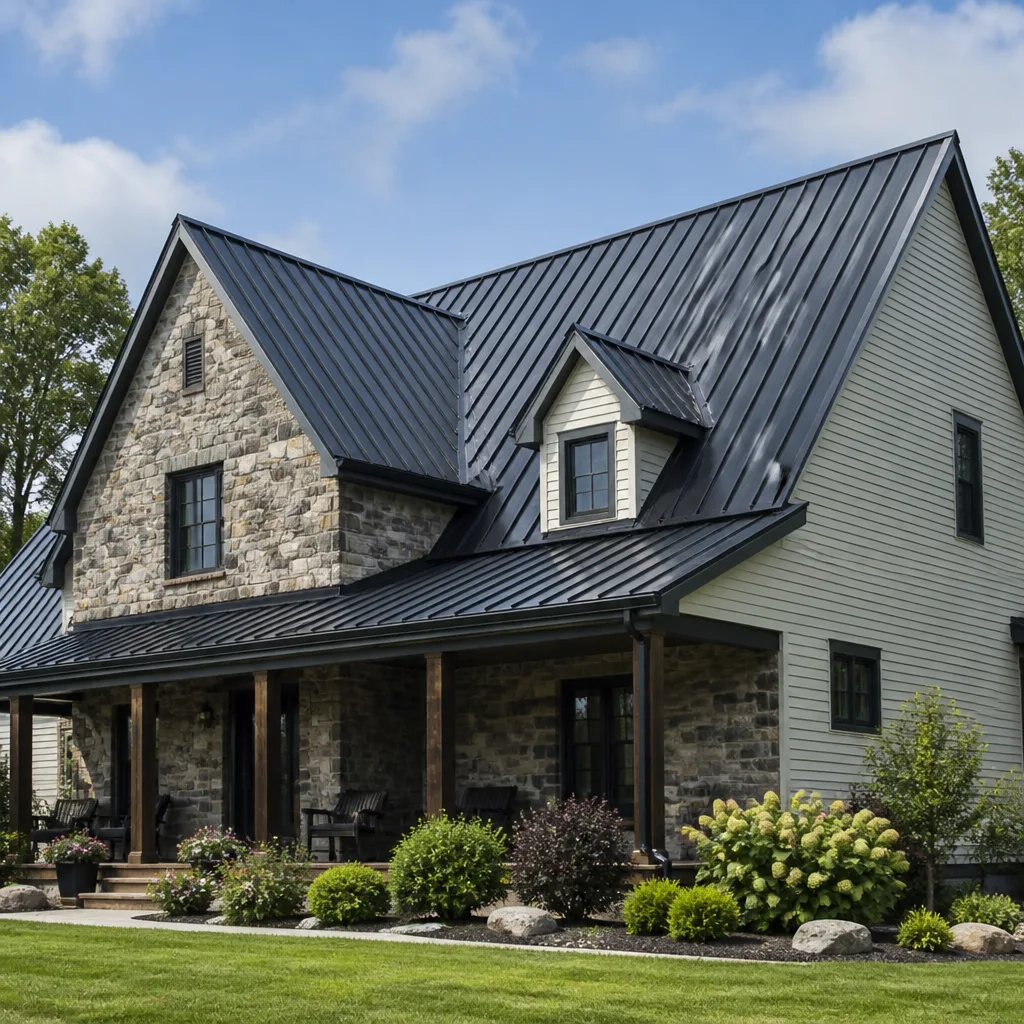 Metal roofing
 Architectural shingles
 Tile roofing
 GAF
 Owens Corning
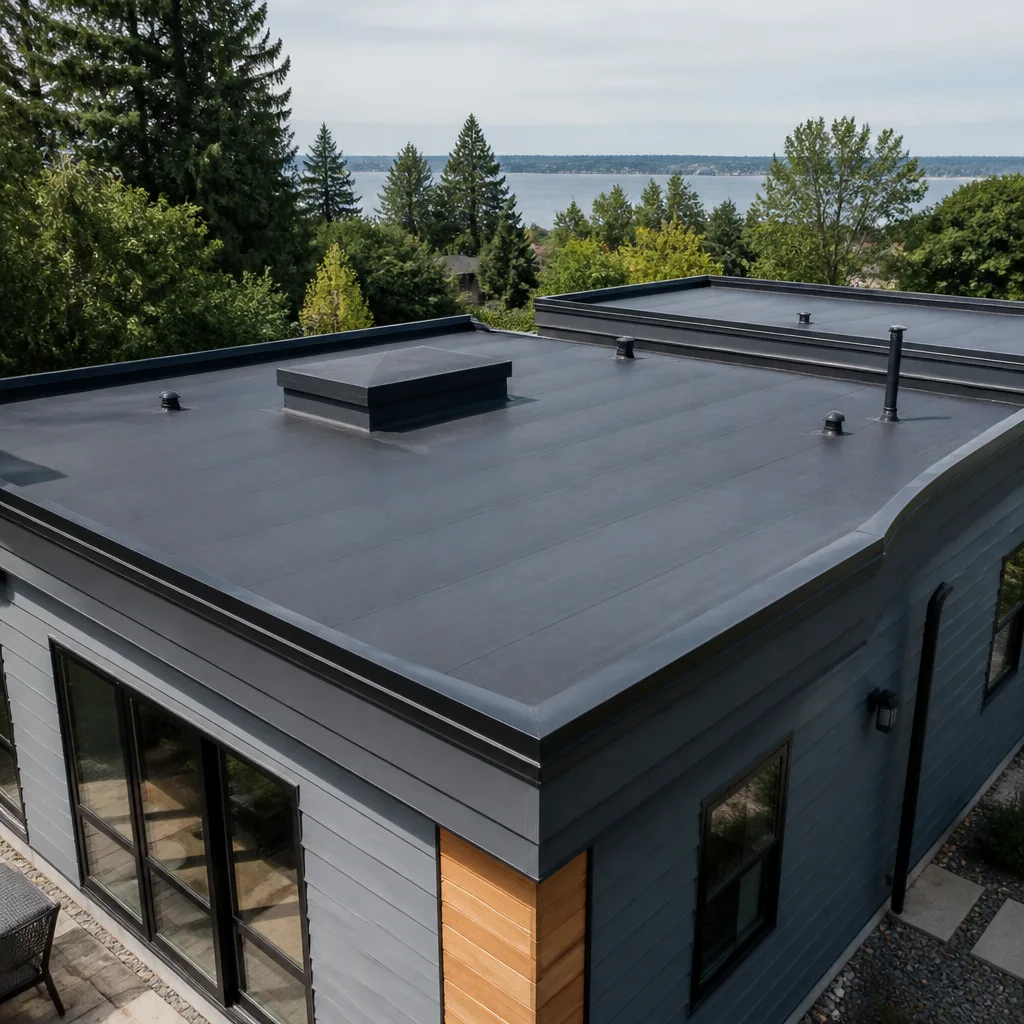 Flat & low-slope
Free roof inspection with deck photos before we talk money - GAF and Owens Corning certified installation
Roofing Warning Signs: A Boulder City Homeowner’s Reference Guide
That dark stain spreading across your ceiling looks exactly the same whether it showed up in the middle of a monsoon downpour or appeared on a dry January morning after a cold night. Your roof doesn’t know the difference on the surface, but the fix underneath couldn’t be more different. Desert roofing fails in ways that wet-climate guides never bother to illustrate: coatings that oxidize under relentless UV, adhesives that let go in extreme heat, tile that splits from thermal cycling rather than impact. Read the wrong symptoms and you’ll pay for the wrong repair. This guide walks through what each warning sign actually means for a roof in Boulder City, so you can tell cosmetic wear from a system that’s genuinely at the end of its life.
Styles & brands we work with
- Architectural shingles
- Metal roofing
- Tile roofing
- GAF
- Owens Corning
- Flat & low-slope
Quick Answer
Roof warning signs in Boulder City fall into two categories: signs of normal aging (light granule loss, faint chalking, minor color shift) and signs of active failure (interior staining after a storm, joint separation at flashing, membrane splitting, or functional granule loss that exposes the substrate). The first group means you should schedule an inspection and plan ahead; the second means you should call a roofing professional now, because in desert heat a small breach can widen fast between summer and the next monsoon season.
Table of Contents
- Why Boulder City Roofs Fail Differently
- The Exterior Signs: What UV-Aged Roofing Actually Looks Like
- Functional vs. Cosmetic Granule Loss: The Benchmark That Matters
- Thermal Splitting vs. Impact Damage on Tile Roofs
- Flashing Failure Signals You Can See From the Ground
- The Interior Signs Homeowners Misread
- What Your Attic Tells You That Your Ceiling Doesn’t
- Common Mistakes to Avoid
- When to Call a Professional
- Frequently Asked Questions
- The Bottom Line
Why Boulder City Roofs Fail Differently
Boulder City sits in the Mojave Desert at an elevation high enough to see hard freezes in winter and sustained heat through summer. That combination is what separates a Boulder City roof from a roof in coastal California or the Pacific Northwest: your system is expected to absorb UV intensity that breaks down asphalt binders, then contract sharply when the temperature drops overnight, then expand again the next morning. That daily flex is cumulative. A shingle that’s rated for thirty years in moderate conditions may see accelerated aging in the desert because the binder at the surface is being degraded by ultraviolet light almost every day it’s exposed to the sun.
Two failure modes result, and they look different from the textbook versions:
- UV-driven surface degradation. Asphalt shingles fail from the top down here. The binder oxidizes, the mat becomes brittle, and the granules that protect the surface lose adhesion. What you see is chalking, a faded or grayish cast, and granules shedding far faster than a humid-climate roof would ever shed them.
- Thermal-driven stress. Tile, metal, and membrane systems deal with repeated expansion and contraction across the daily temperature swing. The failure shows at the joints, seams, and fastening points first, then works inward. Wind is a secondary stressor but a real one during monsoon season, when fast-moving cells push moisture into any loose edge.
None of this means a Boulder City roof fails faster than a roof anywhere else. It means the schedule is different, and the signs you should be watching for are the ones the desert produces, not the ones that show up in a guide written for homeowners in rainier parts of the country. Our team at Roofing Boulder City inspects roofs across the city, and the calls we get most often are about signs that a homeowner has been told are “just cosmetic” when they aren’t, or vice versa.
The Exterior Signs: What UV-Aged Roofing Actually Looks Like
If we had to name the single most underreported exterior sign of a roof that’s aging prematurely in Boulder City, it would be chalking. Chalking is the powdery residue that forms when an asphalt or coated surface has been broken down by ultraviolet exposure and the binder oxidizes. It looks like a dust film on tile, on the granules, or on painted metal. It’s not the same as dust from a desert wind storm, and it’s not a stain; it’s a chemical breakdown happening at the surface.
Chalking is the first stage. The stages typically unfold like this:
- Color shift and surface fade. The roof looks washed out, more gray or lighter than it was. This happens because the surface coating has thinned and the pigment has broken down. On a roof that’s ten years old or less, this is a warning sign. On a roof that’s already near the end of its rated life, this is expected.
- Chalking. Powdery residue accumulates on the roof surface and washes down at the edges or into the gutters (a separate system, but the staining tends to show there). Wipes away, but returns.
- Surface erosion. The exposed asphalt thins to the point where the mat underneath is visible. This is not a cosmetic condition: at this stage the shingle has lost its weather resistance.
- Cracking and surface delamination. The shingle or membrane begins to crack along the surface or has already delaminated from the layer beneath. This is replacement territory, not repair.
Walk the perimeter of your home after a light rain or first thing in the morning when the dew has settled. Look for granule accumulation at the base of your downspouts and near the drip edge. Look up at the roofline on each slope. If one slope is noticeably more washed out than the others, you may be looking at a UV-facing issue that’s been accelerated by the direction the roof points. Southern and western exposures get more sun hours; that’s not an opinion, it’s geometry, and the difference between slopes on a Boulder City roof is often visible in the color alone.
Metals and modified membranes have their own version of this: coatings that chalk, seams that lift, and surface cracks that show as fine spidering. If your home has a flat or low-slope section, walk the perimeter and look across the surface at eye level. The cracks show as a fine alligator pattern when the coating has oxidized. That’s a repairable condition in its early stages and a replacement condition once it reaches the substrate.
Functional vs. Cosmetic Granule Loss: The Benchmark That Matters
Every asphalt shingle loses granules over its life. That’s normal, and finding a few granules in the gutter or at the base of a downspout is not a reason to call anyone. The question every homeowner should be asking is not “are they shedding?” but “how much of the protective surface has shed?” There are visual benchmarks for that.
Here’s how to tell the difference:
- Cosmetic loss. Granules are missing in small patches or scattered spots, but the underlying asphalt mat is still black and intact. The roof still looks like a roof from the ground. This is normal wear and does not justify a replacement by itself.
- Functional loss. You can see the mat through the shingle. Bare spots are large enough to show the asphalt layer or the fiberglass mat beneath it. Granules pool at the drip edge after every rain. This is not cosmetic wear: a shingle with functional granule loss is no longer protecting the structure below it.
- Localized vs. system-wide. If the bare spots are confined to one slope or one area, you may be looking at a repairable problem (damaged shingles, wind scour, or sun exposure on a specific slope). If bare spots appear across the whole roof, the shingle’s rated life has been consumed and the system is due for roof replacement.
Granule loss is also accelerated on slopes that face the sun and on roofs with poor attic ventilation. Heat building up under the decking from below adds stress to the surface from the reverse side. When we look at a roof, we’re looking at granule loss and attic heat together, because they interact. You can buy yourself years of serviceable life by keeping the roof cooler and the surface intact, or you can replace a roof that was prematurely cooked by a ventilation problem and end up with the same result on the new one.
How do you check without walking the roof? Binoculars from the ground work. So does a phone photo taken from a ladder positioned safely on stable ground, held above shoulder height with the camera pointed at the slope. If you can see the mat from the ground at the peak or on the sunniest slope, that’s a sign you should have it inspected by someone who can get on the roof safely.
Thermal Splitting vs. Impact Damage on Tile Roofs
Tile roofs are common in Boulder City because they handle the heat well. But tile has its own failure modes and the two most confused ones are thermal splitting and impact damage, which can look almost identical from the ground. They have completely different causes, and they need different repair scopes.
Here’s how to tell them apart:
- Thermal splitting. The crack runs cleanly across the tile or along the length of it, often in a straight line. There’s no impact crater and no bruising around the edges. It happens because the tile has expanded and contracted repeatedly through daily heat cycling until a stress line formed. The crack edges are sharp and the break is often mirrored on adjacent tiles in the same row, because they’re all experiencing the same conditions.
- Impact damage. There’s a chip, a crater, or a spider-shaped fracture radiating from a central point. Debris or windblown material may be near the break. The break tends to be localized: one or two tiles, not an entire row.
The repair scope differs. A broken tile from an impact is a spot repair: replace the individual tile, check the underlayment beneath it, and confirm the surrounding tiles are intact. Thermal splitting is often a broader issue. If one row of tiles has split, the adjoining rows may be on the same failure cycle, and the underlayment beneath may also need attention. A tile roof needs to be looked at as a system, not as individual pieces. Repair-only work is sensible when the failure is isolated and the underlayment is sound. When splitting is widespread across the roof, roof repair may not be enough and the honest answer is that the underlayment or the tile itself needs broader attention.
What you can do from the ground: walk the perimeter, look up at the sloping surfaces, and note whether the broken tiles appear scattered or in a pattern. If they line up across a row or appear on the same slope at the same height, thermal splitting is more likely. If they’re scattered, check for impact. Either way, have it looked at before the next rain, because split tile admits water to the underlayment and the underlayment is the part that actually keeps your ceiling dry.
Flashing Failure Signals You Can See From the Ground
Flashing is the formed metal or membrane that seals the joints where your roof meets something else: a wall, a chimney, a vent pipe, a skylight. It’s the part of the roof that fails first in almost any climate, because it’s the part that has to accommodate movement and water simultaneously. On a hot desert roof, the movement is more pronounced, and joints that have been caulked or sealed need to be examined.
Here’s what to look for from the ground:
- Joint separation. The caulk or sealant at the flashing perimeter has pulled away from the wall or the roof surface. This shows as a visible gap, a dark line, or a slightly lifted edge. It’s easy to see with a pair of binoculars from the sidewalk or from a ladder.
- Rust streaks or water staining on the wall below the flashing. Rows of vertical streaks on stucco directly below a wall-roof intersection, especially after a rain, mean water is getting behind the flashing and running down.
- Lifted or curling metal. The flashing has come up at an edge. This gets worse with thermal cycling.
- Nail heads visible on the flashing. If you can see the nails, they’re exposed to water and UV, and the seal around them is likely compromised.
Flashing failure is one of the most common causes of a leaking roof that gets misattributed to the shingles. Homeowners see a ceiling stain and assume the roof surface is at fault when the actual breach is at a vent boot, a chimney head-wall, or a skylight frame. Our technicians see this pattern repeatedly: the roof surface is intact, but the flashing at a pipe or a wall has pulled away and water has been entering at the joint for weeks before anyone noticed the stain. The fix is often a flashing repair rather than a roof replacement, which is why identifying the failure point first matters.
The Interior Signs Homeowners Misread
Interior warning signs are where Boulder City homeowners most often get it wrong, because the same visual symptom can come from two completely different problems with completely different fixes. Reading them accurately saves money.
The ceiling stain that shows up in winter. A brown stain that appears after a cold night, before the spring rains start, is a strong indicator of condensation rather than an active leak. Warm moist air from the living space rises into the attic, meets a cold roof deck, condenses, and runs down to the ceiling. The fix here is a ventilation and air-sealing issue, not a shingle issue. Call a roofer to confirm it, but don’t authorize a roof replacement for a condensation stain.
The ceiling stain that shows up during monsoon season. Brown rings that appear or grow during a storm, and dry out between storms, are almost certainly from an active leak. The breach is usually in the roof surface, the flashing, or the underlayment. This is an active water intrusion and needs to be located, not just painted over.
Efflorescence on walls near the roofline. That white, chalky residue on interior walls near the ceiling or exterior stucco just below the roofline is not mold and is not a stain from a leak. It’s mineral salt that’s been carried by moisture migrating through the wall assembly and has dried on the surface. It’s a warning sign that water is present in the wall-or-roof assembly somewhere, and the source is usually at the flashing, at the roof-to-wall transition, or behind an exterior coating.
HVAC performance drops. If your air conditioner seems to be running more but the house stays warmer, the problem is often attic heat load, not the HVAC equipment. In a Boulder City summer, an attic with inadequate ventilation can reach temperatures high enough that the HVAC system has to work harder for every degree of cooling. That’s a roof-system issue: intake and exhaust ventilation, radiant barrier considerations under the deck, and insulation. If your HVAC tech has inspected the unit and found no problem, the next call should be to a roofer, not another HVAC visit.
What Your Attic Tells You That Your Ceiling Doesn’t
Your ceiling only shows water damage after it’s already soaked through the drywall. Your attic shows the early warning signs weeks or months earlier, if you know what to look for. When we perform a standalone Boulder City roof inspection, the attic is where we start.
Here’s what to look for the next time you’re up there:
- Daylight through the roof deck. Any visible light coming through the decking itself means there’s a breach in the roof surface or a gap at a penetration. Small pinpoints of light around the roofline may be gaps at the perimeter flashing.
- Water staining on the decking and rafters. Brown lines, dark streaks, or ring-shaped stains on the underside of the roof deck usually follow the plane of the roof downward. Follow the stain upward to find the breach.
- Rusty nails and fasteners. Condensation and slow leaks show up as corrosion on nail heads and hangers. Rust means moisture has been present long enough to start oxidizing the metal.
- Sagging or soft spots in the decking. This is serious. It means water has reached the structural layer and affected the wood. It’s a sign that a repair may need to address more than the surface.
- Staining at the roof-to-wall junctions. Look where the roof plane meets a vertical wall (often a dormer or a step in the roof). Staining at that interior corner usually points to flashing failure on the outside.
Attic ventilation matters as much as the roof surface in this climate. A well-vented attic stays cooler, which reduces the daily thermal stress on the roof above. If your attic is consistently hot enough that you can feel the heat when you open the access hatch in the summer, that heat is doing double duty: stressing the shingles from below and making your HVAC work harder. Roofing Boulder City inspects attics as part of any roof inspection, because the roof is a system that includes the deck, the ventilation, and the material above – not just the shingles.
Common Mistakes to Avoid
We’ve seen a lot of homeowners in Boulder City make similar mistakes when they’re trying to read their own roof. Here are the ones that cost the most:
- Assuming one brand is the only option. Homeowners who think they have to replace like-for-like with whatever the builder put on the roof are usually surprised to learn that manufacturers offer different products at different price points, each suited to different areas of a home. We work with seven major roofing manufacturers (GAF, CertainTeed, Owens Corning, IKO, Atlas, Tamko, and Boral), so the material is a real choice, not a foregone conclusion.
- Treating every ceiling stain as an active leak. Winter condensation stains and summer monsoon leak stains are different problems. Painting over a stain without identifying the source wastes a weekend and hides the evidence.
- Assuming cosmetic granule loss means the roof is shot. A thirty-year-old roof with light granule loss and no interior signs may have years of serviceable life left. A five-year-old roof with functional loss and visible mat needs immediate attention. The benchmark is whether you can see the substrate, not whether the granules are shedding.
- Walking the roof to check. Tile roofs especially. Stepping on a temperature-stressed tile can fracture it; the fix is easy, but it costs more than the inspection. A ground-level look with binoculars catches most exterior warning signs.
- Hiring a generalist. A contractor who also does gutters, siding, and landscaping is splitting attention. Roofing-only specialists know the desert failure modes in Boulder City far better than a general contractor who handles roofing as one of ten trades.
- Skipping a professional inspection before buying or selling. A standalone inspection from a roofing specialist (not a sales estimate from a roofer who wants the replacement job) gives you an honest read on the system, which is the kind of information a buyer or seller actually needs. Roofing Boulder City offers this as its own service for exactly that reason.
- Assuming the manufacturers are interchangeable. CertainTeed, Owens Corning, IKO, and Atlas all make good products, but each has different performance tiers and warranty structures. Matching the product to the home and the budget is a conversation, not a default.
When to Call a Professional
If your roof falls into any of these categories, schedule an inspection rather than guessing: you see active water intrusion during a rain event; you see bare mat visible through the shingles from the ground; flashing has visibly separated at a wall, chimney, or vent; a section of the roof sags; or you’re within a year of buying or selling the home and don’t know the status of the roof system. A standalone inspection from a roofing specialist will give you a straight answer about which failure mode you’re looking at and what that failure mode requires. Roofing Boulder City offers free estimates in Boulder City, and we inspect first before recommending anything. No assumptions, no upsell. Call (888) 293-7813. We answer 24/7. Fast dispatch from 7am to 7pm, Sunday through Friday.
Frequently Asked Questions
The determining factor is scope. If the failure is isolated to a few shingles, one flashing joint, or a single tile, repair is usually the right call. If you see bare mat across the whole roof, widespread thermal splitting, or sagging in the deck, the system is at end of life and replacement is the honest answer. A standalone roof inspection will tell you which side of that line your roof is on before you commit to anything. Call (888) 293-7813 to schedule a free estimate.
No. A stain that appears after a cold night (before the rainy season) may be from attic condensation rather than an active roof breach, which is a ventilation problem rather than a shingle problem. A stain that appears or grows during or after a monsoon rain is almost always an active leak. Getting the distinction right before you authorize a repair saves both money and time. Call (888) 293-7813 to schedule a free estimate.
Look at the crack shape. A clean, straight crack with sharp edges and no impact crater is likely thermal splitting, and it often follows a pattern across a row or slope. A spider-shaped fracture or a chip with a central break point is impact damage. Thermal splitting is more likely to require broader repair attention because adjacent tiles may be on the same failure cycle. Call (888) 293-7813 to schedule a free estimate.
Only if the mat is visible through the shingle. Granules shedding on the driveway or in the gutter is normal wear. Visible asphalt mat, bare spots, or granules pooled heavily at the drip edge after a rain indicate functional granule loss, which is a replacement threshold. Light granule loss in an older roof is not a replacement signal by itself. Call (888) 293-7813 to schedule a free estimate.
In Boulder City summers, attic heat load is a common cause of HVAC performance drops that look like equipment failure but aren’t. An attic that’s reached high temperatures because of inadequate ventilation transfers that heat into the home below, so the HVAC has to work harder for every degree of cooling. A roof inspection can check attic ventilation and whether the roof system is contributing to the heat load. Call (888) 293-7813 to schedule a free estimate.
Most roofs in Boulder City should be inspected every two to three years, and every year once the roof is past fifteen years old. The high UV environment here ages roofs on a faster schedule than most manufacturer guides assume. An annual check catches flashing separation and granule loss before they become interior leaks. If you’re buying or selling a home, a standalone inspection is worth scheduling regardless of the roof’s age. Call (888) 293-7813 to schedule a free estimate.
The Bottom Line
Reading a roof in Boulder City is a different skill than reading one in a wetter climate. The signs that matter most here are visual: chalky residue, bare mat through the shingles, thermal cracks in tile, flashing joints that have pulled away, and interior stains that are caused by either condensation or active intrusion. The key is telling the cosmetic signs from the functional ones. Cosmetic granule loss and surface chalking mean it’s time to schedule an inspection. Bare mat, active interior leaks, widespread thermal failure, or sagging decking mean it’s time to act now. Our roof inspection service is a standalone diagnostic, not a sales call, so you get a straight answer before any work is recommended. Roofing Boulder City works with seven leading manufacturers so you have real material choices at every tier, from entry-level to premium systems, backed by manufacturer warranties. We repair when repair is right. We replace when it’s not. We’ll tell you which. Call (888) 293-7813. We answer 24/7. Fast dispatch from 7am to 7pm, Sunday through Friday.
Written by the team at Roofing Boulder City.
See the difference
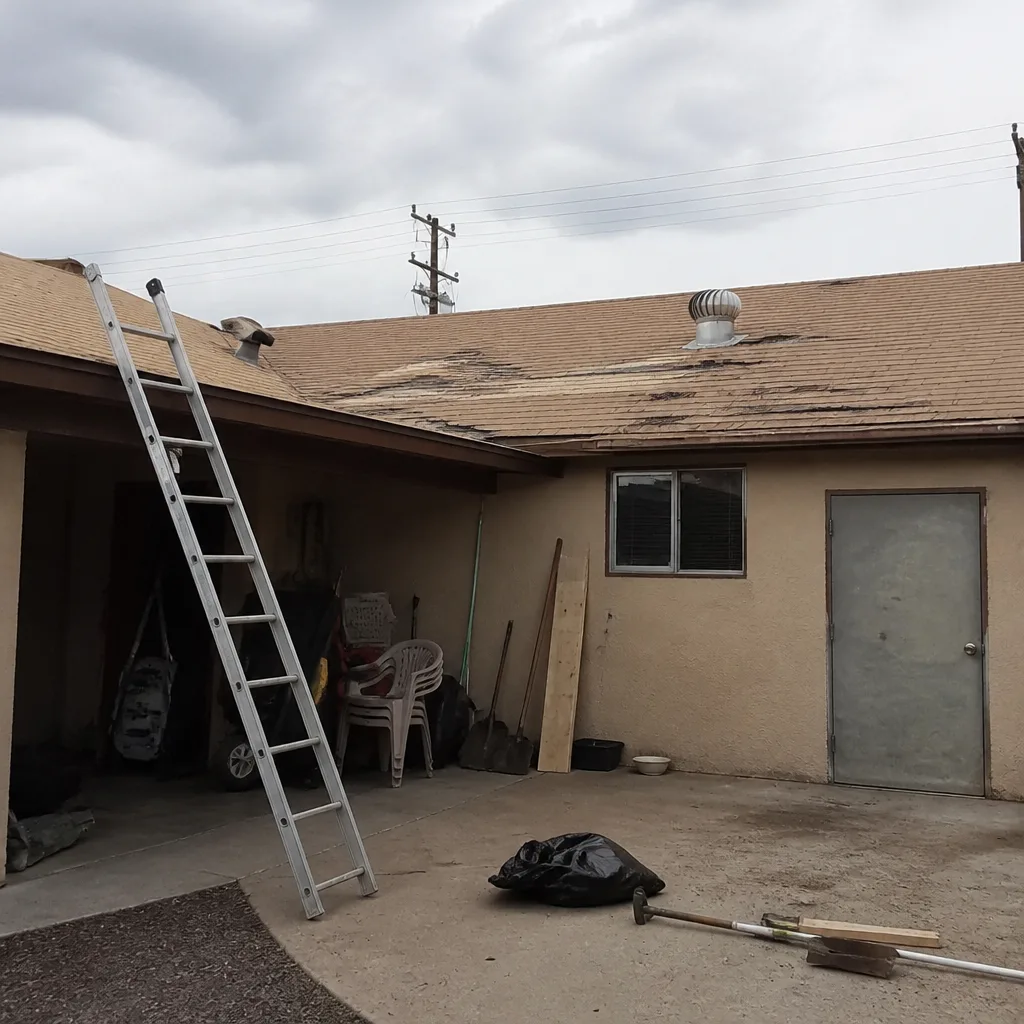 Before
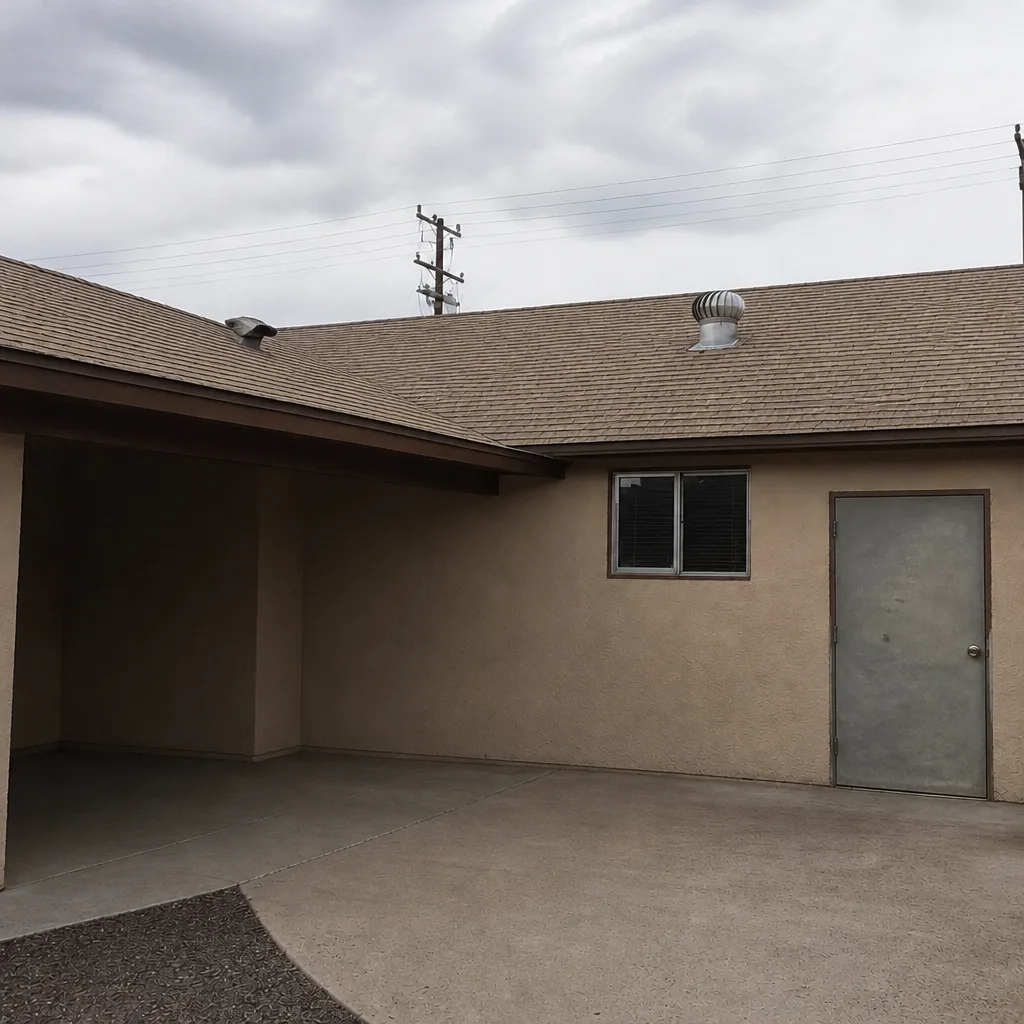 After
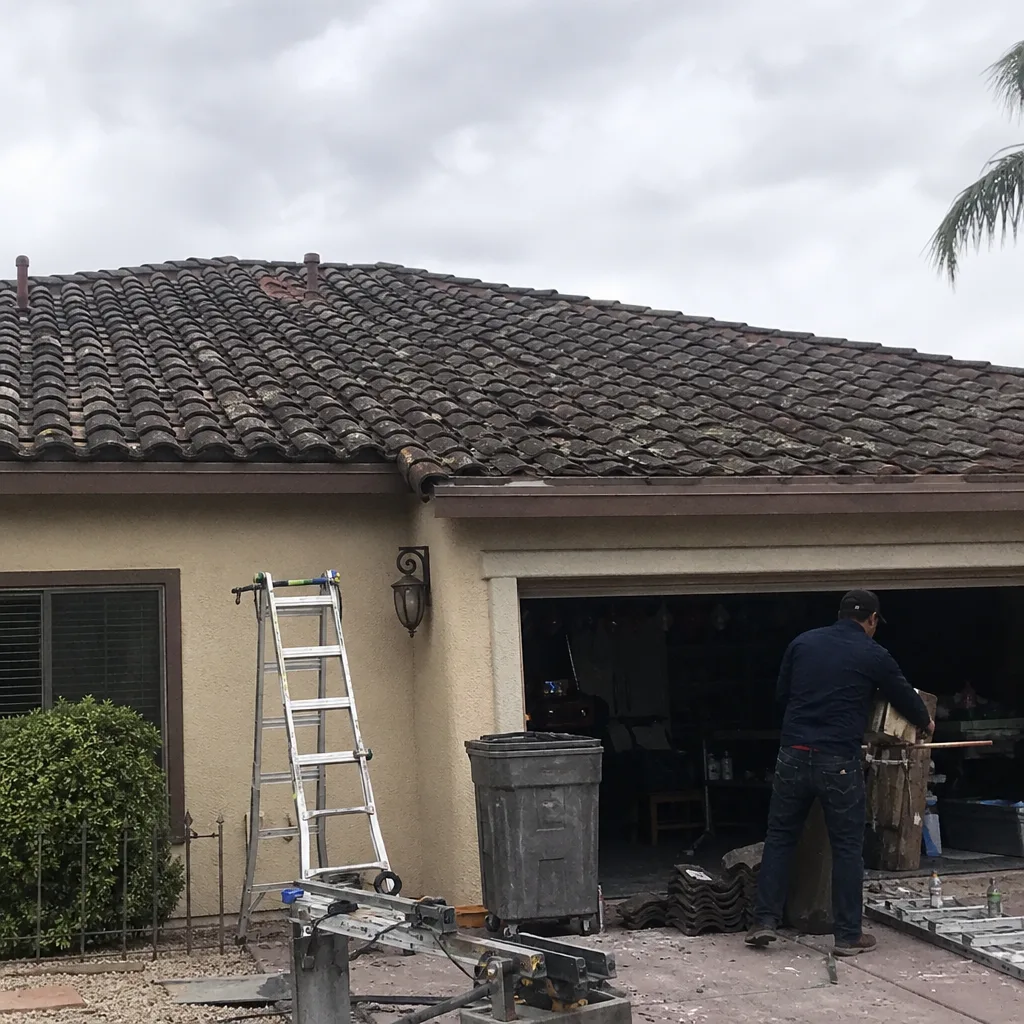 Before
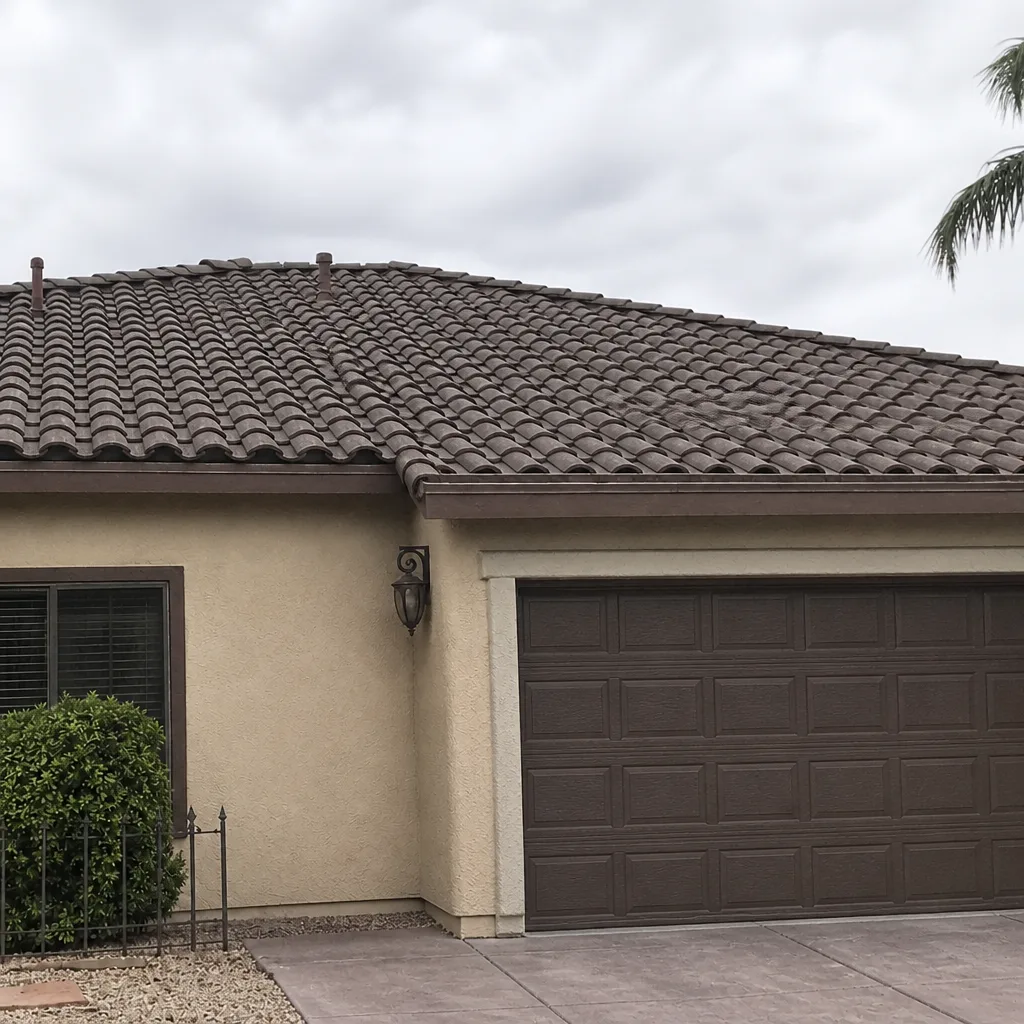 After
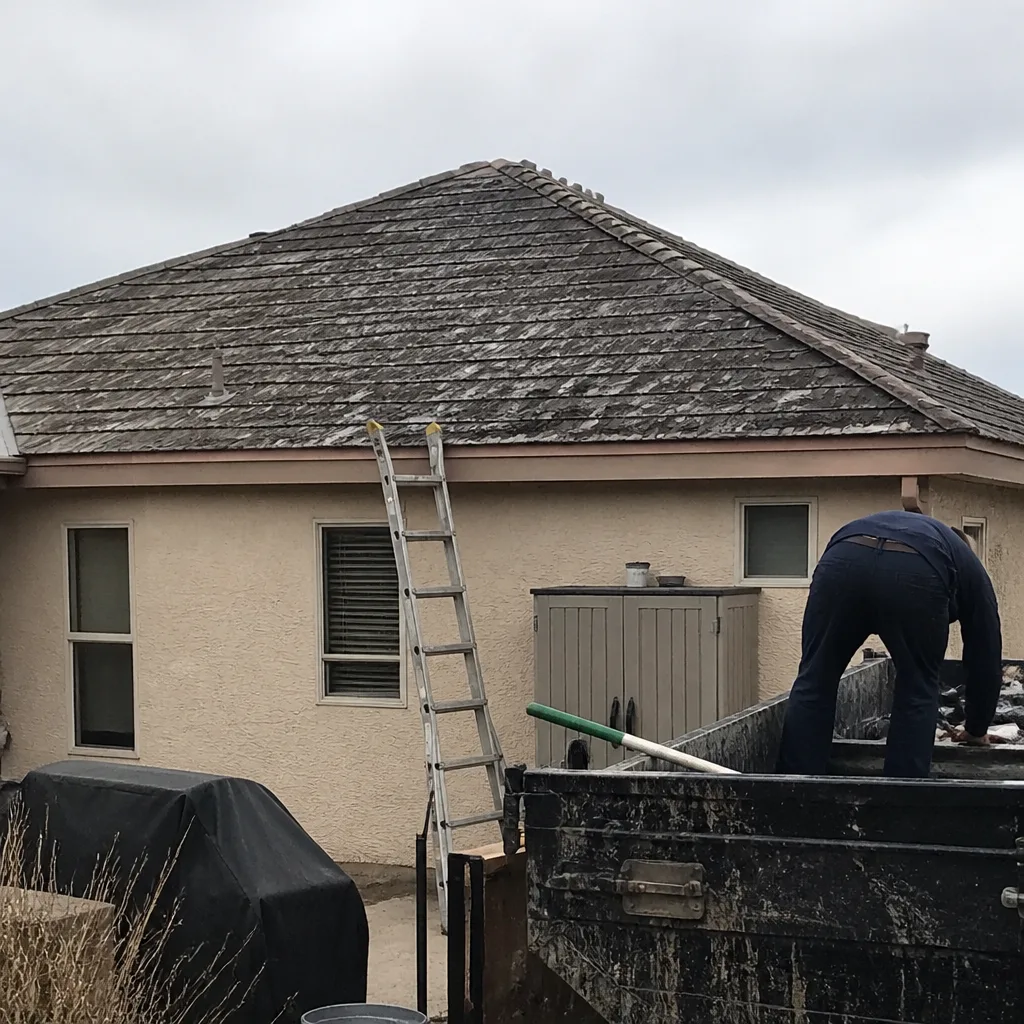 Before
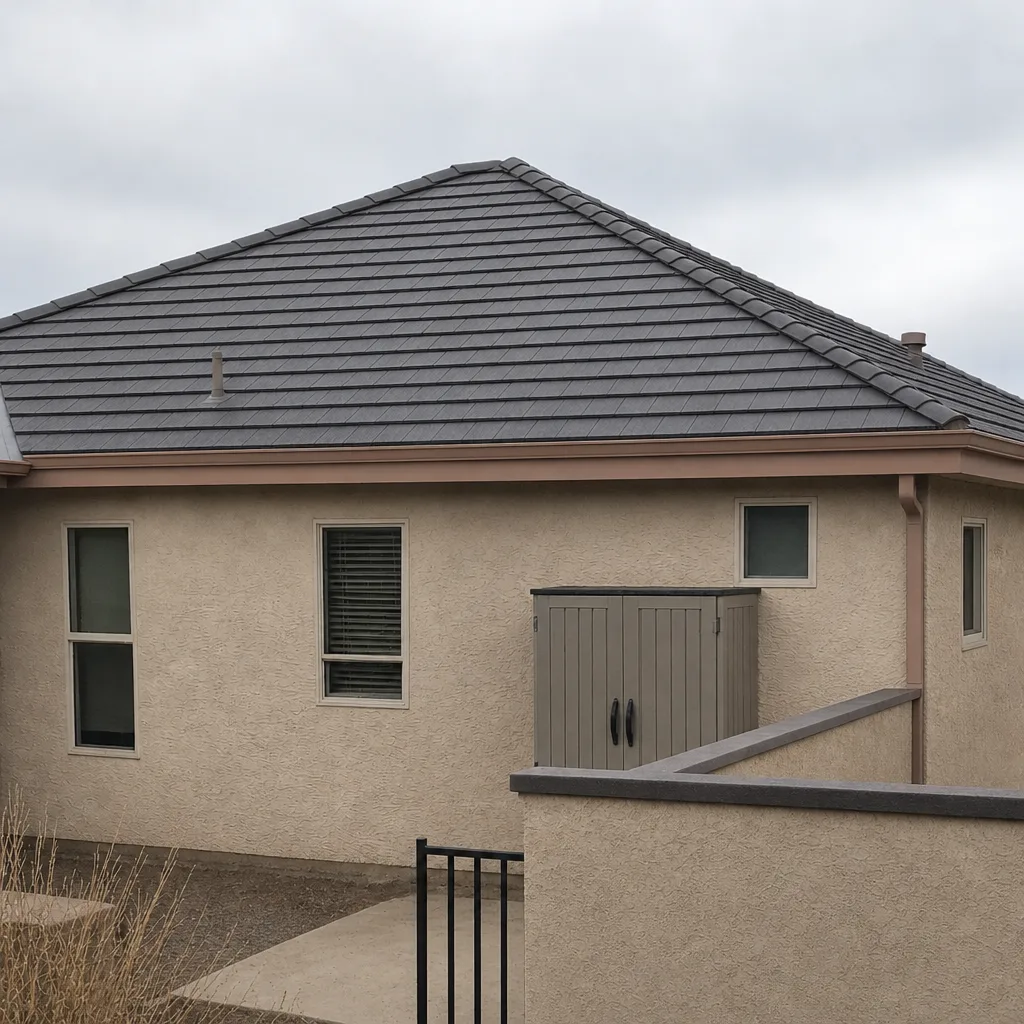 After