
Last updated November 17, 2026
 Architectural shingles
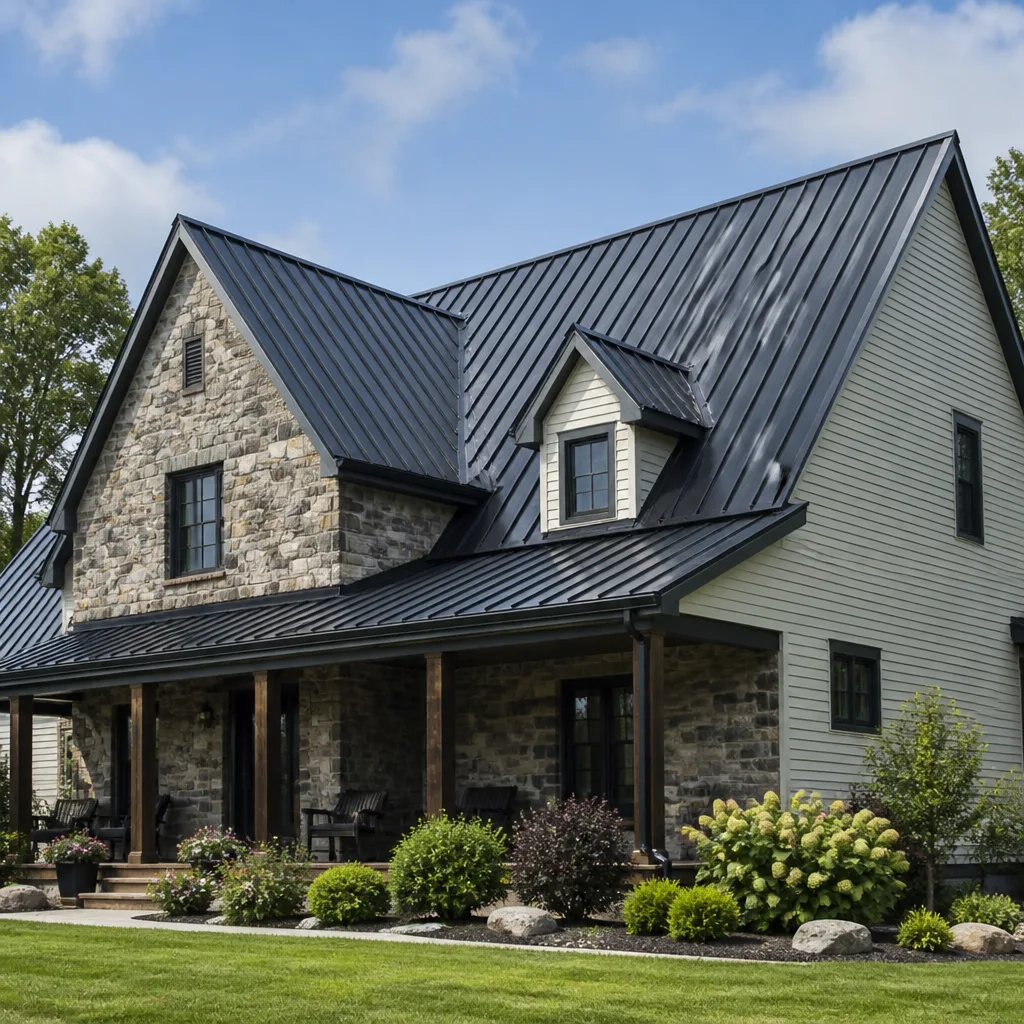 Metal roofing
 Tile roofing
 GAF
 Owens Corning
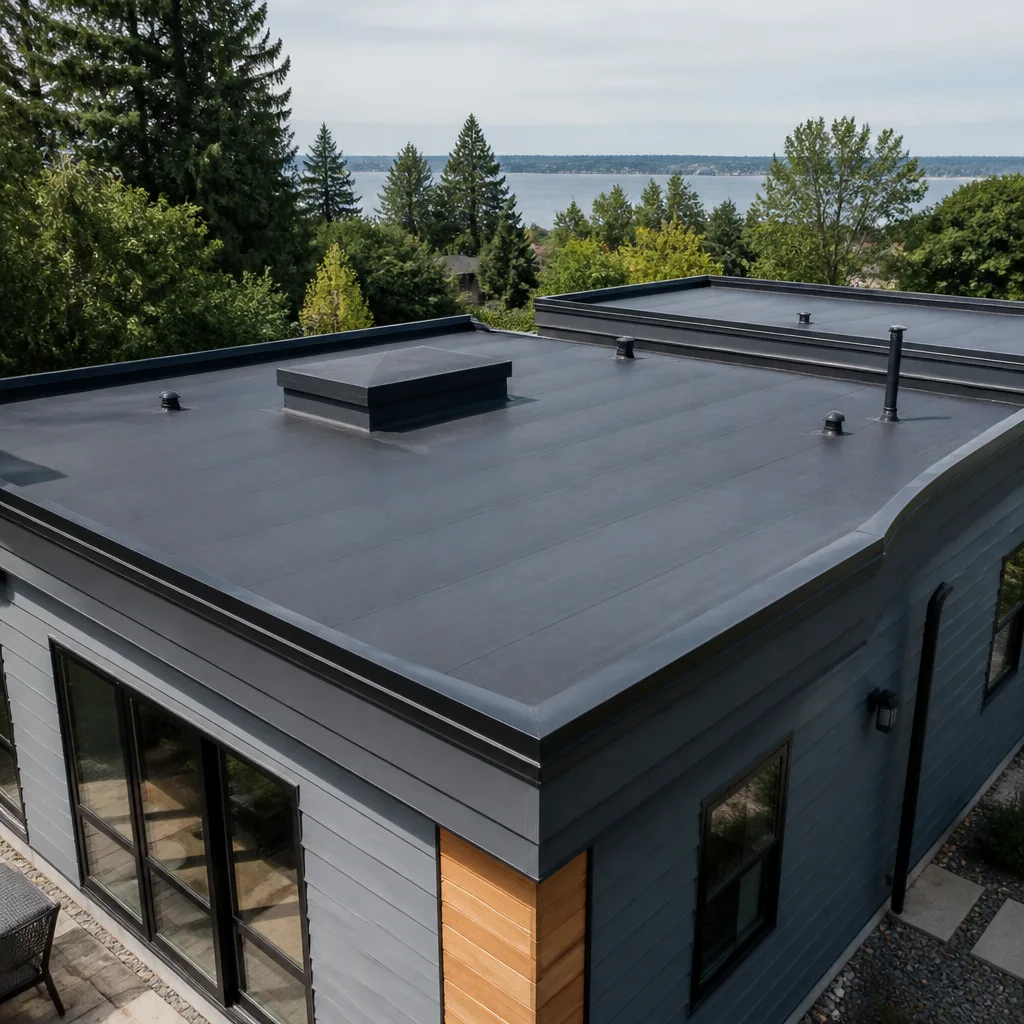 Flat & low-slope
Free roof inspection with deck photos before we talk money - GAF and Owens Corning certified installation
Roof Repair Troubleshooting in Boulder City: Common Problems and How to Fix Them
A water stain on the living room ceiling is almost never directly below the leak. In Boulder City’s flat-to-low-slope homes, water that gets past the roof covering can travel four to six feet horizontally along the decking before it finds a gap and drips through. So the stain you’re staring at is usually the symptom, not the source. This guide teaches you to read the clues before you call anyone: how to trace a stain back to the actual entry point, the three culprits we find most often in Boulder City, and how to tell a flashing failure from a shingle failure from a deck failure.
Styles & brands we work with
- Architectural shingles
- Metal roofing
- Tile roofing
- GAF
- Owens Corning
- Flat & low-slope
Quick Answer
Most roof leaks in Boulder City trace back to a failed penetration, not the field of shingles: deteriorated pipe boot collars, cracked roofing cement around HVAC curbs, and lifted ridgecaps after wind events. Trace the source from the attic side using daylight and moisture, document the timing and location, and make only temporary fixes yourself. Permanent reinstallation is a professional job.
Table of Contents
- Why the Leak Isn’t Where the Stain Is
- How to Trace a Ceiling Stain to the Roof Penetration
- The Three Boulder City Culprits We Find First
- Flashing, Shingle, or Deck: Telling the Failures Apart
- DIY-Safe Temporary Fixes vs. Repairs That Need a Pro
- The Documentation Checklist Before You Call
- Common Mistakes to Avoid
- When to Call a Professional
- Frequently Asked Questions
- The Bottom Line
Why the Leak Isn’t Where the Stain Is
Roof leaks travel. Water enters a small opening near a penetration or flashing detail, then runs along the top of the decking or down a rafter until it hits something it can drip from – a nail, a joint, a low point in the sheathing. That’s why the wet spot inside a Boulder City home is so often on a different wall or even a different room than the actual gap.
Flat and low-slope roofs make this worse. A low-slope roof sheds water slowly, so a small breach has time to spread sideways before it drops. Insulation in the attic can also wick moisture several feet from the entry point, so the dark ring on your ceiling may sit well away from the actual failure.
What this means for you: don’t decide what’s wrong based on where you see the stain. Instead, work backward. Find where the water is entering from the roof and attic side, then match that entry point to a cause. That habit – symptom to source – is the whole game. It’s also the difference between a homeowner who calls and says “my ceiling is wet” and one who says “there’s a crack in the roof cement above the HVAC curb, and it only drips during wind-driven rain.” The second description saves diagnostic time and gets you a faster, more accurate answer.
We built our roof repair approach around this idea: find the entry, confirm the cause, then recommend the smallest correct fix. No assumptions, no upsell.
How to Trace a Ceiling Stain to the Roof Penetration
You can do most of this tracing yourself from inside the attic on a sunny day, using daylight and moisture as your guides. Work methodically, and don’t climb onto the roof to chase it – stay inside and let the clues lead you.
The basic method: go into the attic during daylight with a flashlight, find the wet area, and look for pinholes of light coming through the roof above it. Where light enters is often where water enters too.
- Mark the stain location inside the house. Note the room and the exact spot on the ceiling. This is your anchor point; everything you find on the roof has to connect back to it.
- Get into the attic and locate that spot from above. Move insulation gently and find the wet or stained sheathing directly over or near the ceiling stain.
- Look for daylight through the roof. On a sunny day, small gaps at penetrations and flashing show as light pinholes. Trace where the light comes from.
- Follow the moisture trail. Feel the decking for dampness and note the direction water has been traveling – that tells you which way and which detail the leak is coming from.
- Match the entry point to a detail on the roof. A pipe, a vent, a chimney, an HVAC curb, a ridgecap, or a valley. That detail is your suspect.
- Write it all down. Location, suspected detail, timing, and weather conditions. This becomes your diagnostic checklist when you call.
If the attic is inaccessible, cramped, or dangerously hot, stop. Summer attic heat in Boulder City can be severe, so don’t force it. A standalone roof inspection is a safe way to get the same answer without the risk. We treat inspection as its own service, not a sales tool – you get a straight read on the roof’s condition whether or not any work follows.
For a broader look at the local picture, see Boulder City and what our area’s climate asks of a roof.
The Three Boulder City Culprits We Find First
When we diagnose a leak in Boulder City, most cases come down to one of a handful of repeat offenders. Here are the three we find most often. None of them are the “big roof failure” homeowners fear – they’re small failures at the details, and they’re fixable.
1. Deteriorated pipe boot collars
Every plumbing vent that punches through the roof wears a rubber collar around it – the pipe boot. Sun and heat dry out that rubber over time, and it cracks. Once the collar cracks, water runs right down the pipe and into the attic. This is one of the most common leaks in a dry, high-UV climate, and it rarely has anything to do with the shingles around it.
2. Cracked roofing cement around HVAC curbs
Rooftop HVAC units sit on a raised curb, and the seam where the unit meets the roof is sealed with roofing cement or a similar sealant. In a desert climate, the constant expansion and contraction of day-night temperature swings causes that sealant to harden and crack. On a flat or low-slope roof, water pools at the curb and seeps into every crack. The result is a leak that shows up as a ceiling stain far from the unit.
3. Lifted ridgecaps after wind events
Spring and summer wind in Boulder City can lift and loosen ridgecaps – the angled caps along the peak of the roof. A lifted ridgecap lets wind-driven rain in directly. You can often spot this from the ground: look for a ridgecap that’s sitting crooked, has visible gaps, or looks looser than its neighbors after a windy spell.
All three of these failures concentrate at penetrations and details, not in the middle of the roof field. Most of what we repair across Boulder City is detail work – collar replacement, curb re-sealing, ridgecap reattachment. That’s why it pays to check the details first.
Flashing, Shingle, or Deck: Telling the Failures Apart
Three very different failures can all produce a leak, and they call for different fixes. Learning to tell them apart from the attic side tells you what kind of repair you’re facing before anyone shows up.
- Flashing failure: The metal or membrane around a penetration, valley, or wall has separated, cracked, or lifted. From the attic, you’ll often see moisture concentrated right at a single detail – a pipe, a curb, a chimney – with dry decking just a foot away. This produces a localized, repeatable leak that shows up in the same spot during the same conditions.
- Shingle failure: The shingles themselves are cracked, missing, curled, or granule-bare. From the attic you may not see much, because the leak starts at the surface and runs down. On the roof side, look for missing or damaged shingles, particularly after a windy event. Leaks from shingle failure tend to appear across a wider area.
- Deck failure: The sheathing underneath is soft, sagging, or delaminated. From the attic you’ll see or feel spongy decking, dark staining, and possibly mold. This is the serious one – it means the roof structure, not just the covering, has been compromised.
How do you use this? Match the pattern. A damp spot clustered at one detail means flashing. A scatter of wetness across a field means shingles. A soft, stained deck means the roof has absorbed water for a while. Memory of the pattern also helps: if it only drips during wind-driven rain, suspect flashing or a lifted cap; if it drips steadily after any rain, suspect shingles or the deck.
When a deck is compromised, small repairs won’t solve it – and that’s when it’s worth asking whether a replacement makes more sense than patching. Our roof replacement service exists for exactly those cases, and we’ll tell you honestly when repair is the right call and when it isn’t.
DIY-Safe Temporary Fixes vs. Repairs That Need a Pro
Some problems you can hold with a tube and a roll of tape until a technician arrives. Others need real reinstallation, and a temporary fix on those can make the leak worse. Here’s the line.
What a temporary fix can do: keep water out of the attic for a few days or weeks, buy you time to schedule a proper repair, and limit further interior damage. What it cannot do: restore the seal permanently, survive the next monsoon, or fix anything structural.
Safe to attempt as a temporary hold
- Butyl tape pressed over a small gap at a curb or a lifted flashing edge can shed water briefly – but heat, sun, and wind will degrade it quickly.
- Roofing cement smeared over a small crack in a curb seal or a hairline gap can close the opening for a short time. It’s a stopgap, not a repair.
- A tarp over a missing shingle area, fastened at the edges, can keep water out during a forecast storm – but this is short-lived and not safe to install if it means getting on a steep or high roof.
Do not attempt these yourself
- Replacing a pipe boot collar: the collar has to be fitted correctly around the pipe and integrated with the surrounding roof – improper work causes the next leak.
- Re-sealing an HVAC curb: the old sealant has to be removed and the seam rebuilt in a way that survives heat movement. A quick smear of cement often fails within a season.
- Reattaching lifted ridgecaps: these need proper fastening and sealing at the peak, where wind loads are highest.
Two safety caveats. First, don’t climb onto a high or steep roof to reach a leak – falls are the real danger, and a temporary fix isn’t worth one. Second, keep in mind that in a desert climate, a monsoon can build fast. A temporary fix that’s holding today may not hold through one good storm. If the problem is at a penetration or a structural detail, call it in and get it done right.
The Documentation Checklist Before You Call
The single best thing you can do before calling a roofer is collect a little information. It cuts diagnostic time, and it helps you describe the real problem instead of the wrong one. Here’s what to gather.
- Timing. When did you first notice the leak or stain? Was it after a specific storm, or gradual?
- Location. The exact room and spot on the ceiling. Include a note of anything seen from the attic side.
- Weather conditions. Does it leak only during wind-driven rain, only after a heavy storm, or steadily every time? Each pattern points to a different cause.
- Frequency. Is it a one-time drip or a recurring pattern?
- What you can see. Cracks at the HVAC curb? A cracked pipe collar? A crooked ridgecap after wind? Note it.
- Roof age and material. What covers the roof, and roughly how old is it? This helps match the fix to the system.
- Photos. A phone photo of the stain and any visible detail on the roof helps a lot.
With that list in hand, a call is efficient. We can tell you what to look at next and how the fix is likely to work. The more accurate your description, the faster the diagnosis and the more useful the estimate.
Common Mistakes to Avoid
- Assuming the stain marks the source. As we said up top, water can migrate four to six feet along decking – always trace back from the entry point, not the ceiling spot.
- Piling on roofing cement to fix everything. Smearing cement over a crack may hide it, but on an HVAC curb or a pipe collar it usually fails within one season of heat cycling.
- Skipping the attic inspection. The attic is where the real evidence lives – daylight pinholes, damp decking, a moisture trail. Skipping it means guessing.
- Chasing the wrong culprit. Owners often replace whole shingle areas when the actual leak is a deteriorated pipe boot collar. Replace the wrong part and the leak returns.
- Climbing a steep or high roof to investigate. The risk of a fall is not worth it. Do your evidence-gathering from the attic and the ground.
- Ignoring a letdown after a dry patch. A temporary fix that survives a few dry weeks can fail as soon as a monsoon arrives. Treat temporary fixes as temporary.
- Calling without a description. “The ceiling is wet” is a hard start. “A crack in the roofing cement above the HVAC curb drips during wind-driven rain” is a fast start – and often a cheaper diagnosis.
When to Call a Professional
Some leaks you can trace and temporarily hold. Others need a trained eye before anything gets worse. Call a professional if the wet area is growing, if you find soft or stained decking from the attic, if a leak returns to the same spot after a temp fix, if the failure is at a penetration or HVAC curb where reinstallation is needed, or if you simply can’t safely get into the attic to diagnose. The same goes for any leak you can’t trace to a specific detail after a careful look – that’s often a sign of two overlapping failures, and that’s a professional diagnosis.
Our technicians have up to 14 years of experience tracing this exact kind of problem. Roofing Boulder City offers free estimates in Boulder City – call (888) 293-7813. We inspect first, then recommend. If a repair solves it, we say so. If it’s time for a replacement, we’ll tell you that too, and walk you through material choices – GAF, Owens Corning, IKO, and more – so you choose what fits your roof and your budget.
Frequently Asked Questions
Go into the attic on a sunny day with a flashlight and look for day light pinholes through the roof above or near the stain, then follow any moisture trail to a penetration or detail. Daylight entry usually marks where water gets in, and the decking tells you which way it traveled. If the attic is too hot or too tight to inspect safely, call (888) 293-7813 and schedule a standalone roof inspection – it’s a free estimate.
No. A stain can come from a roof leak, but also from attic condensation or a plumbing issue. Roof leaks are the most common cause in Boulder City, though, and the day light pinhole check in the attic usually tells you quickly which one you’re dealing with. When in doubt, let a professional confirm it – call (888) 293-7813 for a free estimate.
Only temporarily, and only on small, accessible gaps. Roofing cement over a cracked curb seal or a hairline gap can slow water for a short time, but it won’t survive heat cycling or a monsoon. Permanent fixes – new pipe boot collar, rebuilt curb seal, reattached ridgecap – are what actually stop it.
Pipe boot collar replacement and HVAC curb re-sealing are the two we encounter most, with lifted ridgecaps after wind events close behind. These are all detail failures, not whole-roof failures, which is why most of what we repair here is quick, targeted work. Call (888) 293-7813 if yours matches one of these.
No. The written estimate sets the final price. We inspect first, recommend the smallest correct fix, and the price you agree to is the price you get. Call (888) 293-7813 to schedule your free estimate and get a written, itemized quote.
Most detail repairs – a collar, a curb seal, a ridgecap – are morning-to-afternoon jobs. A larger shingle-field repair or a decking fix takes longer. The estimate will tell you the scope. Call (888) 293-7813 for a free estimate and a clear timeline once we’ve inspected.
The Bottom Line
The stain is a clue, not the culprit. In Boulder City’s homes, water travels along decking and cluster at the details – the pipe collar, the HVAC curb, the ridgecap – so trace the source from the attic side, gather the timing and weather conditions, and describe the pattern, not just the wet spot. Most local leaks are detail failures, and most are fixable. Make safe temporary holds when you can and skip the risky ones. Then call a roofer who will inspect first, tell you the truth about repair vs. replacement, and give you a written estimate you can count on.
Roofing Boulder City is roofing only – repair, replacement, and inspection – with seven manufacturer brands to choose from. Call (888) 293-7813 for a free estimate. We answer 24/7. Fast dispatch from 7am to 7pm, Sunday through Friday.
Written by the team at Roofing Boulder City.
See the difference
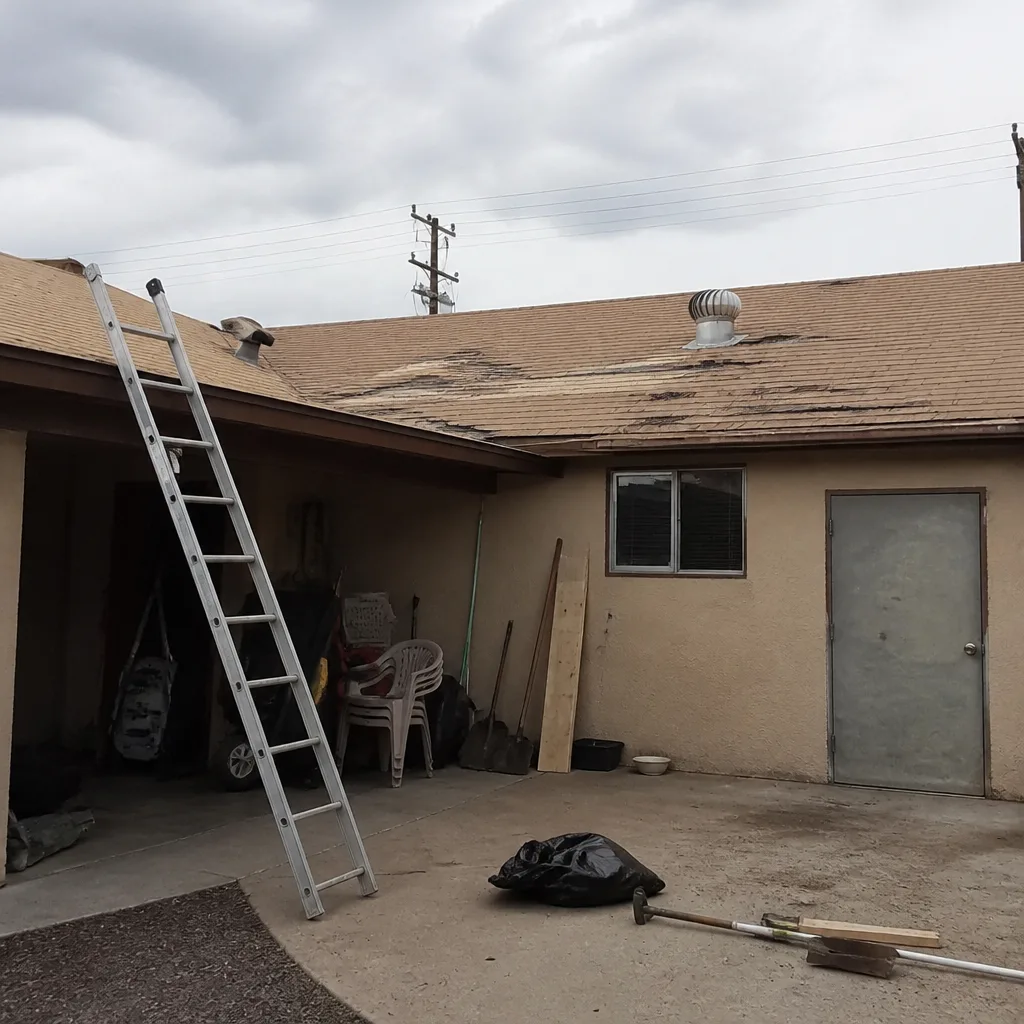 Before
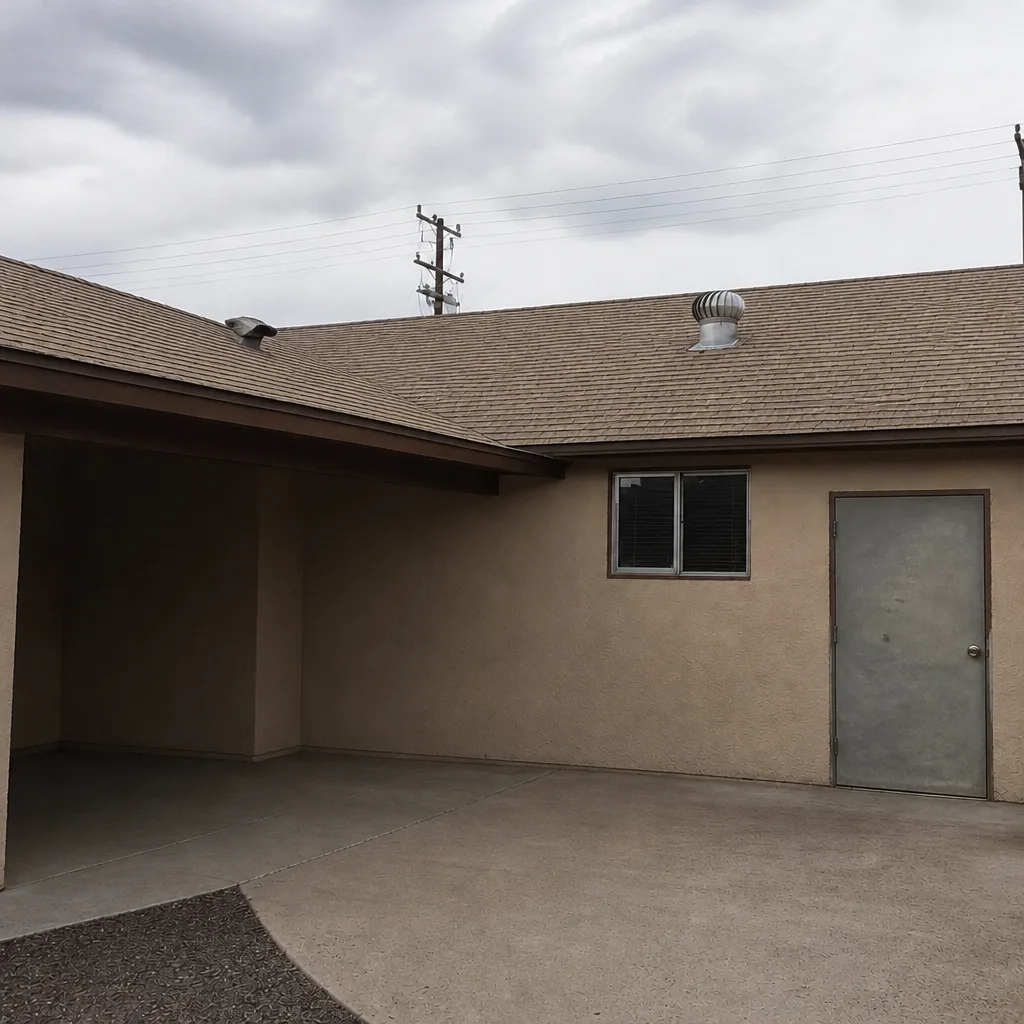 After
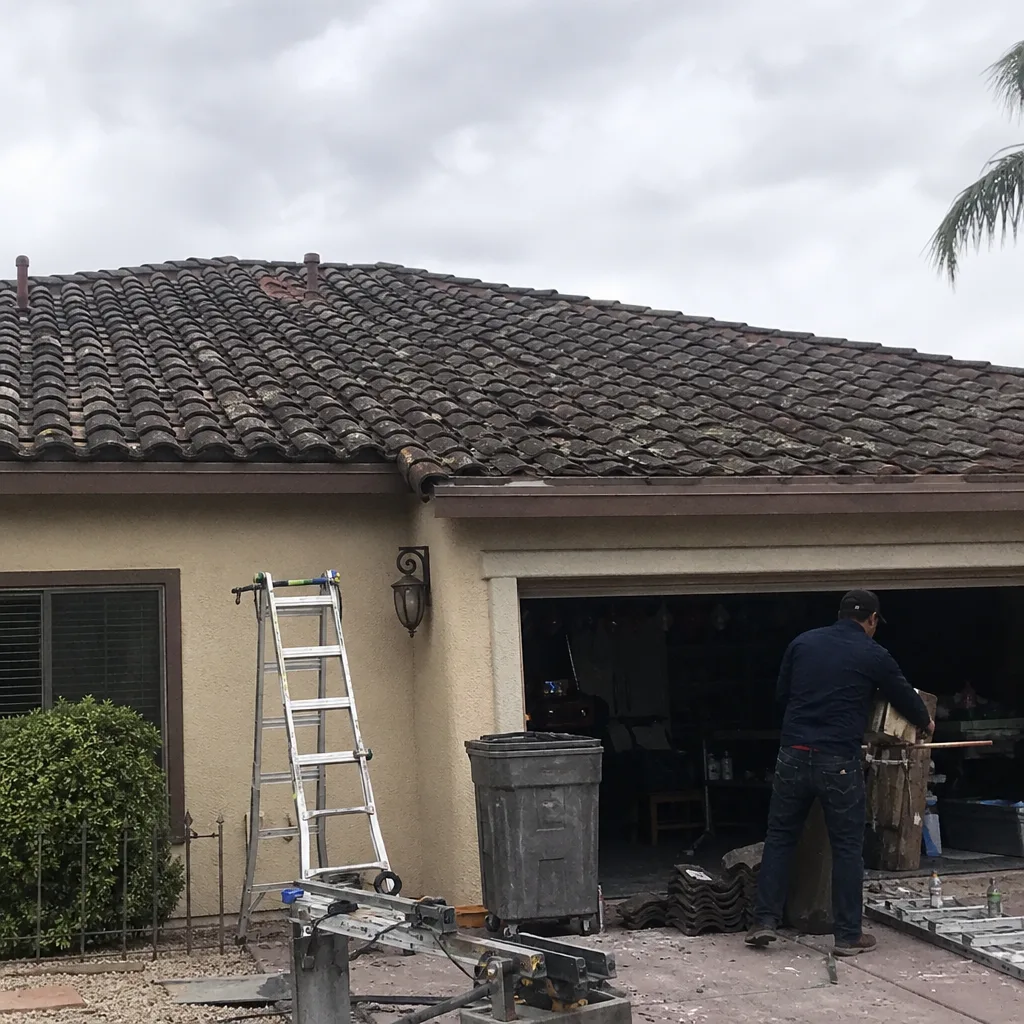 Before
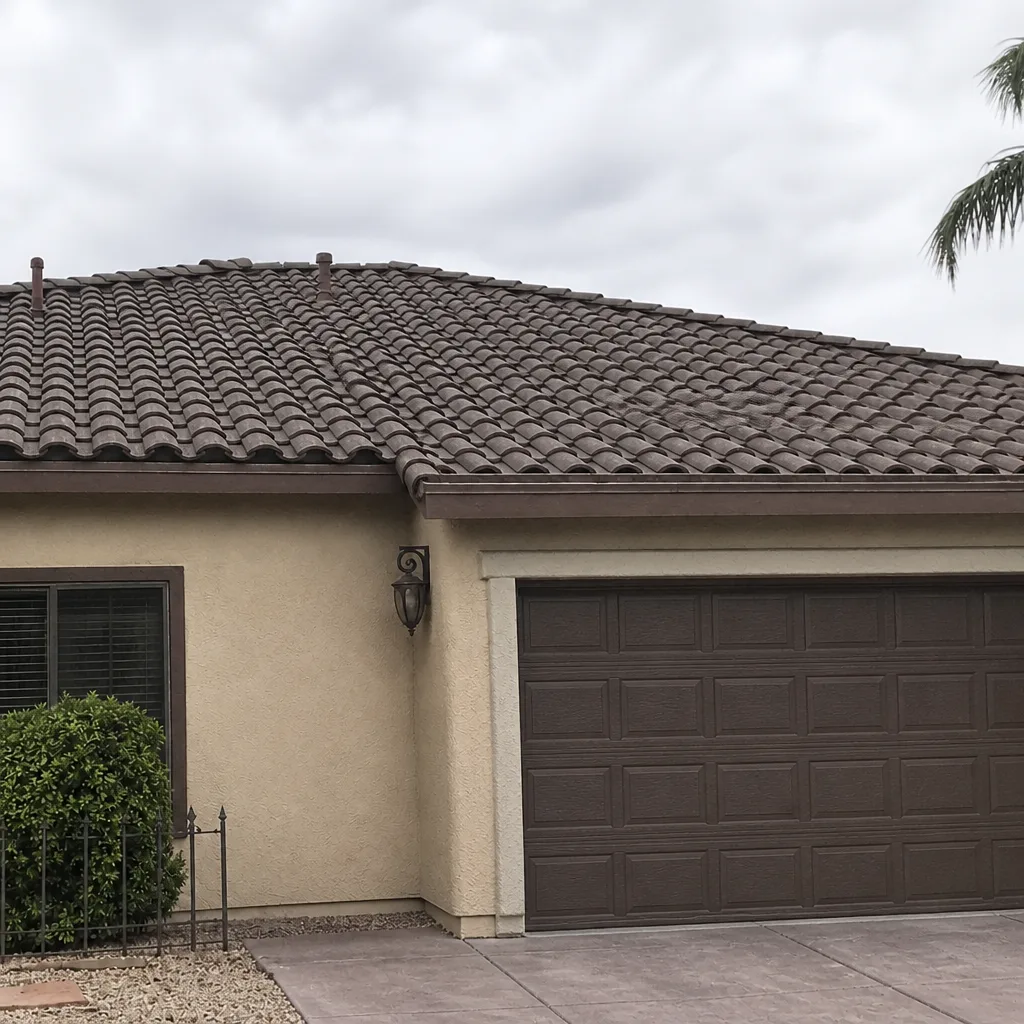 After
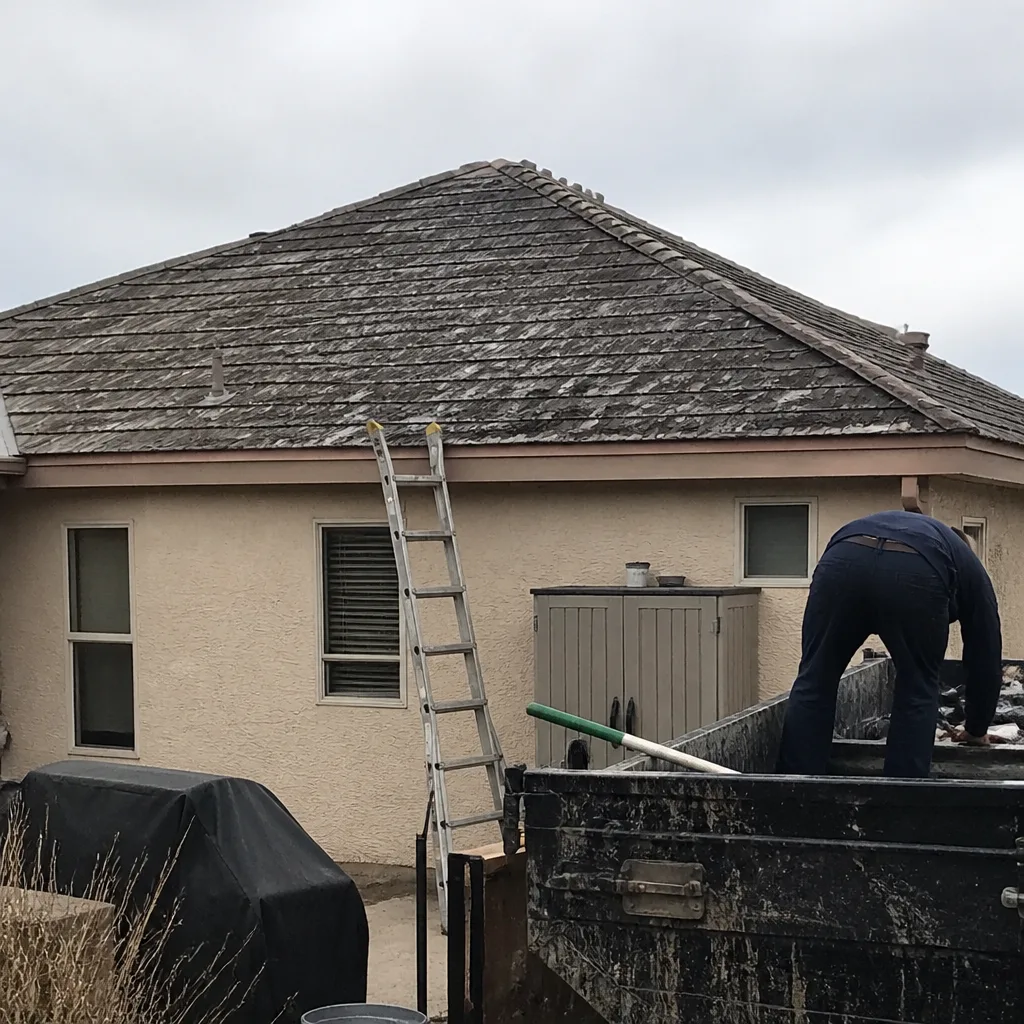 Before
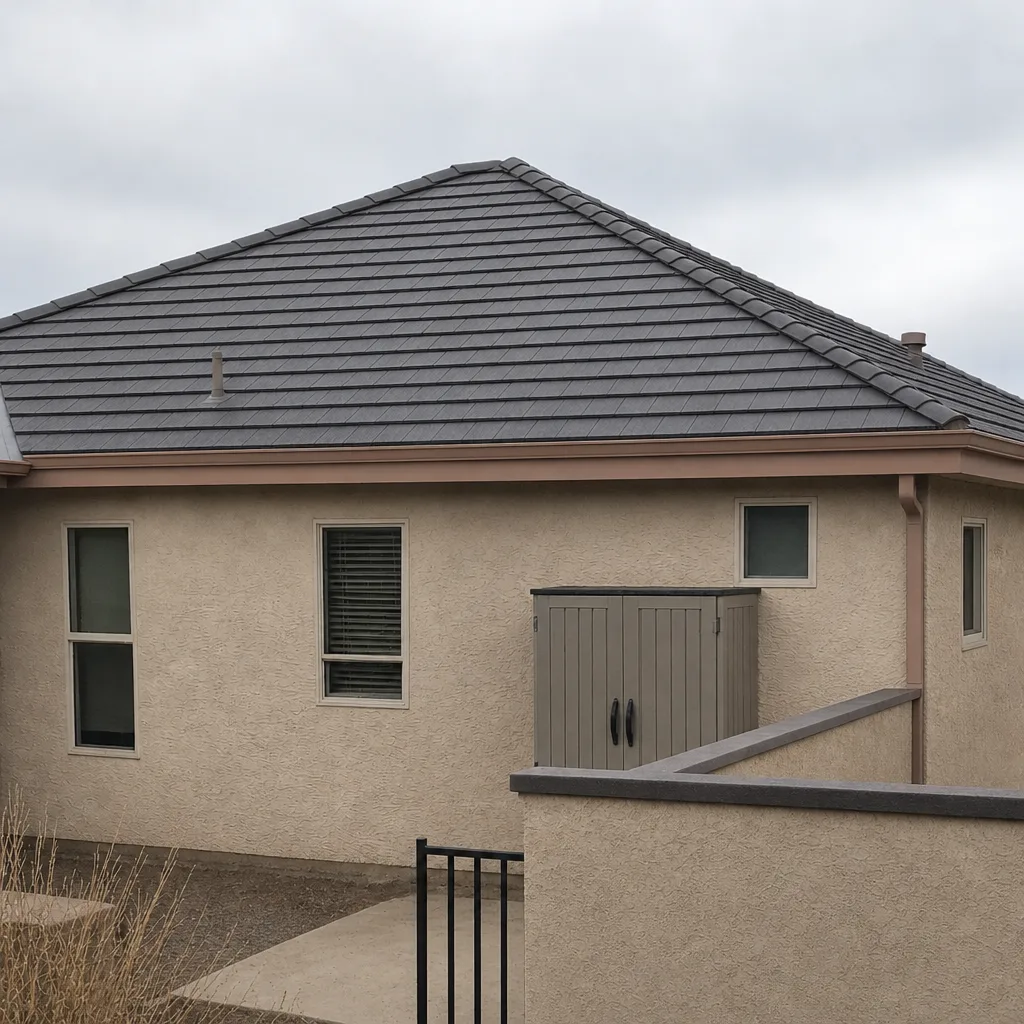 After