
Last updated November 17, 2026
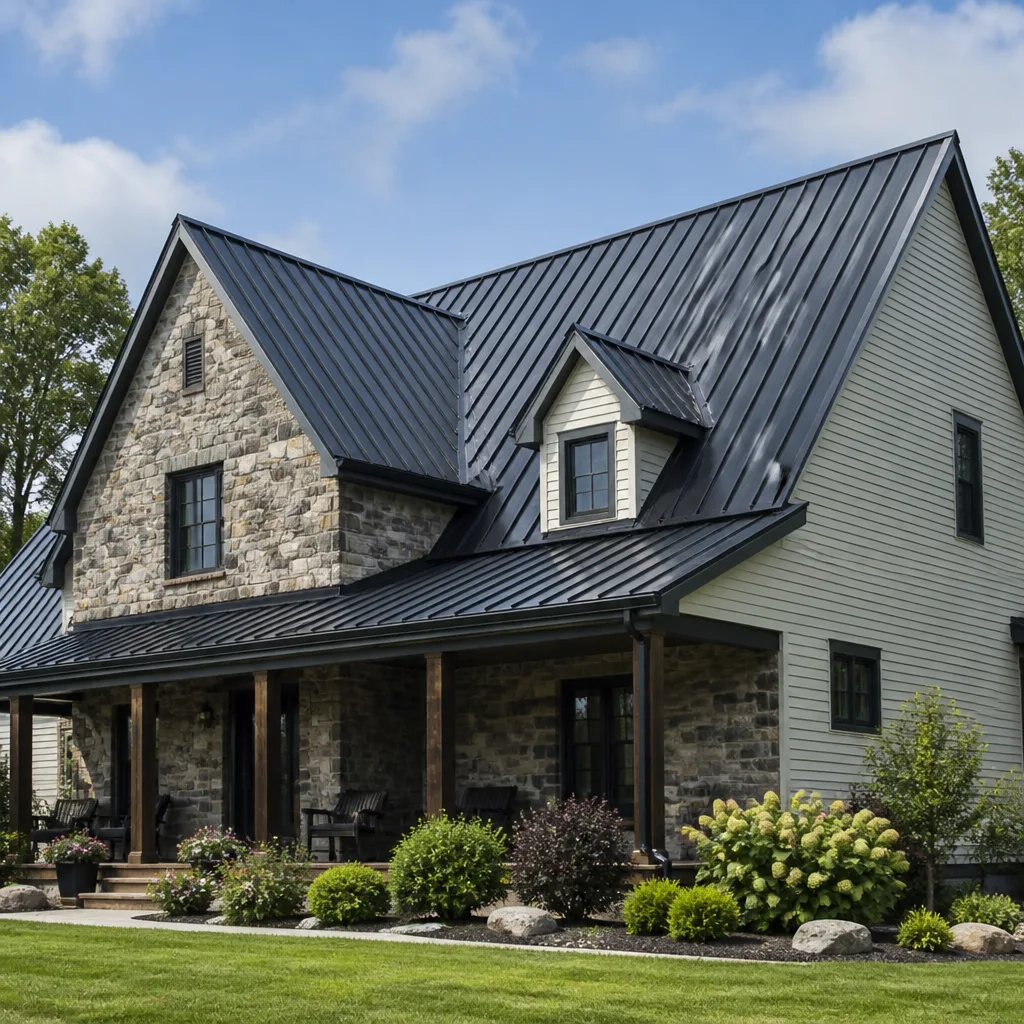 Metal roofing
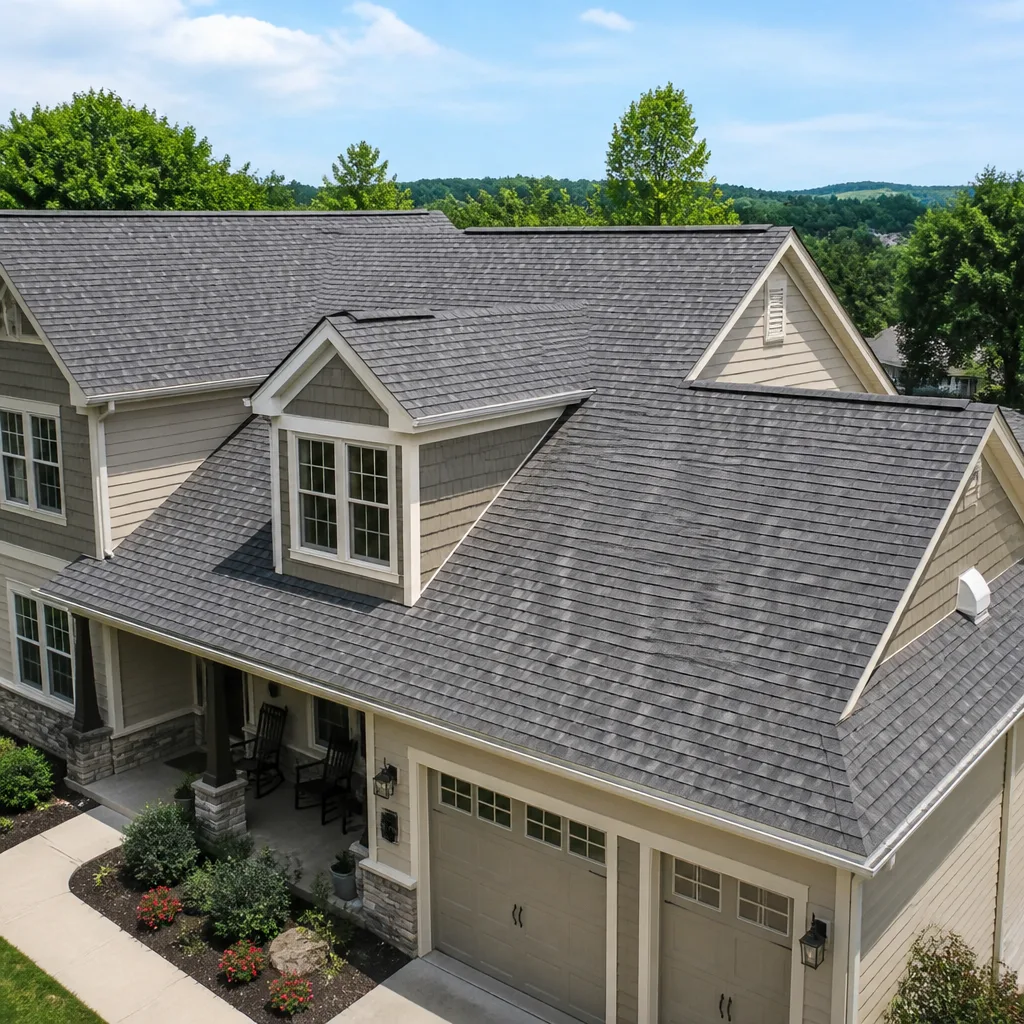
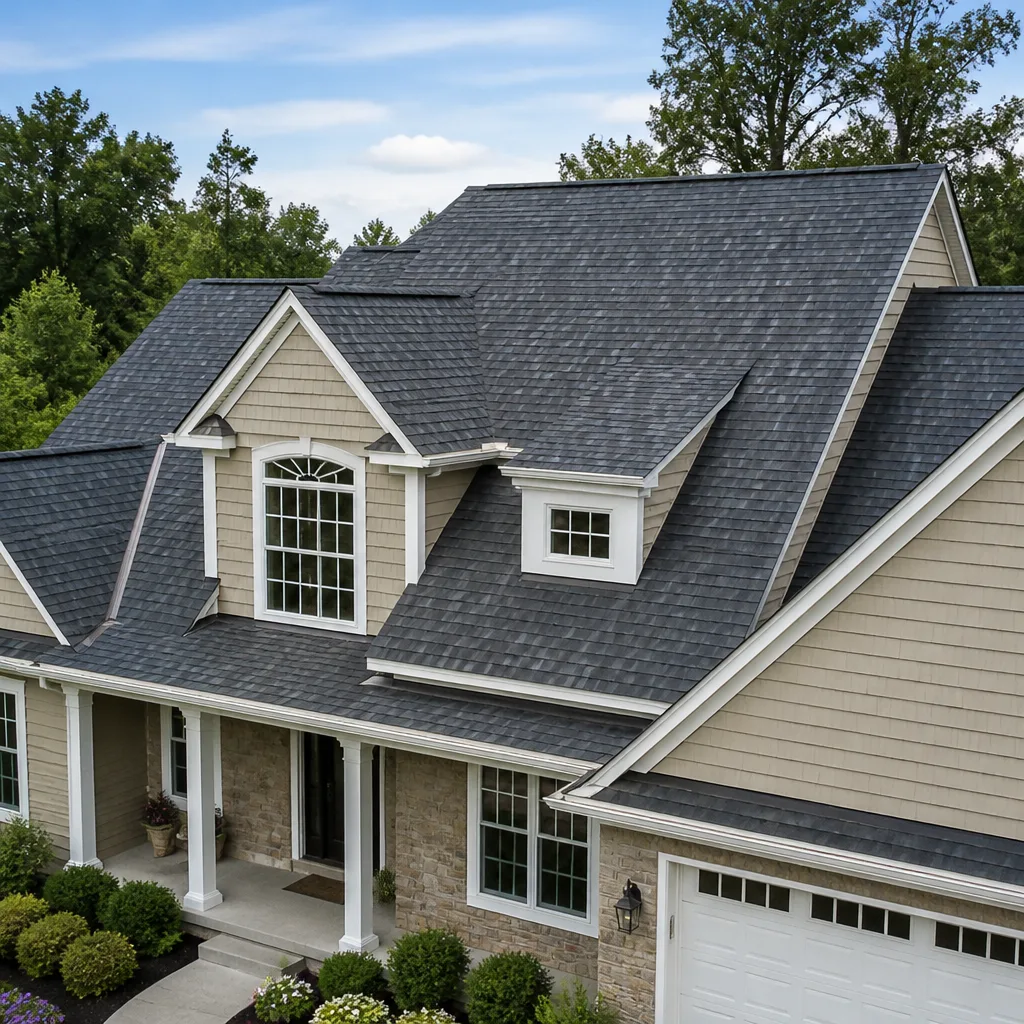 Architectural shingles
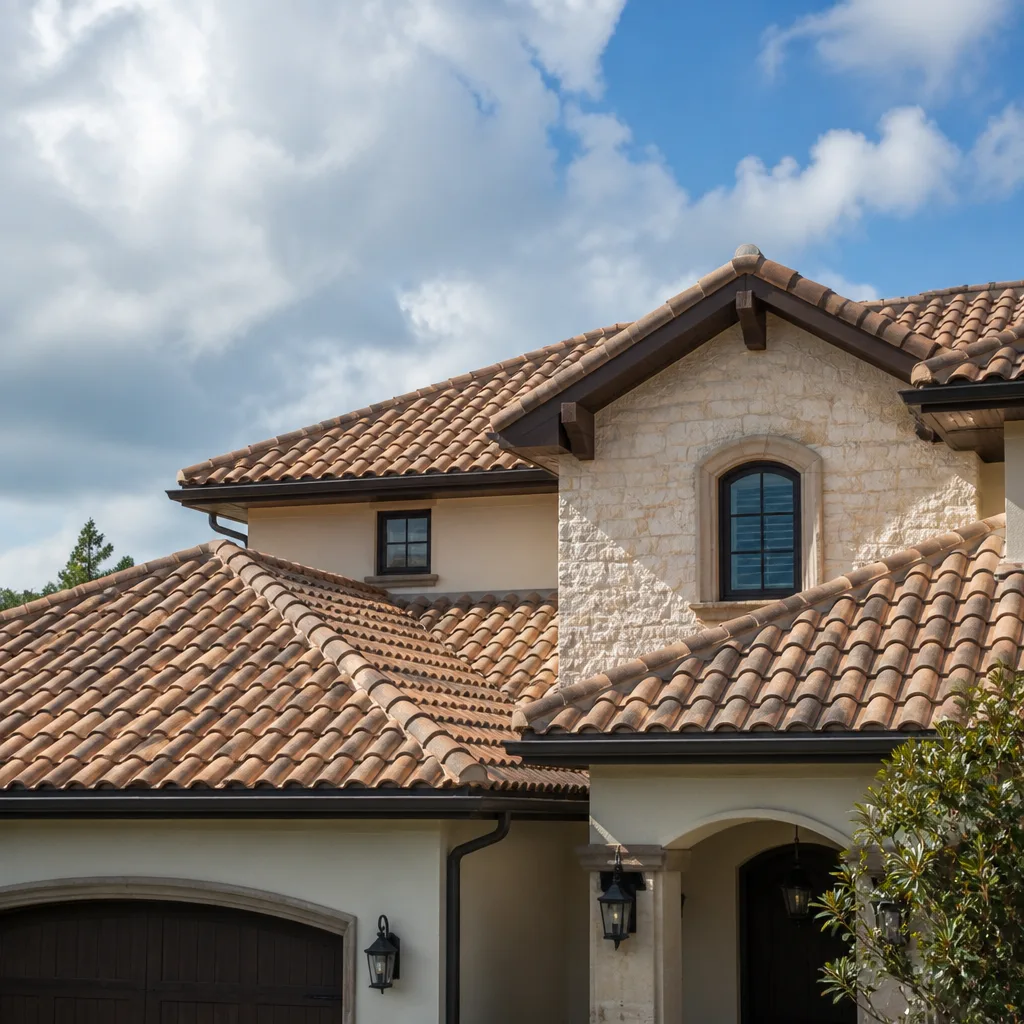 Tile roofing
 GAF
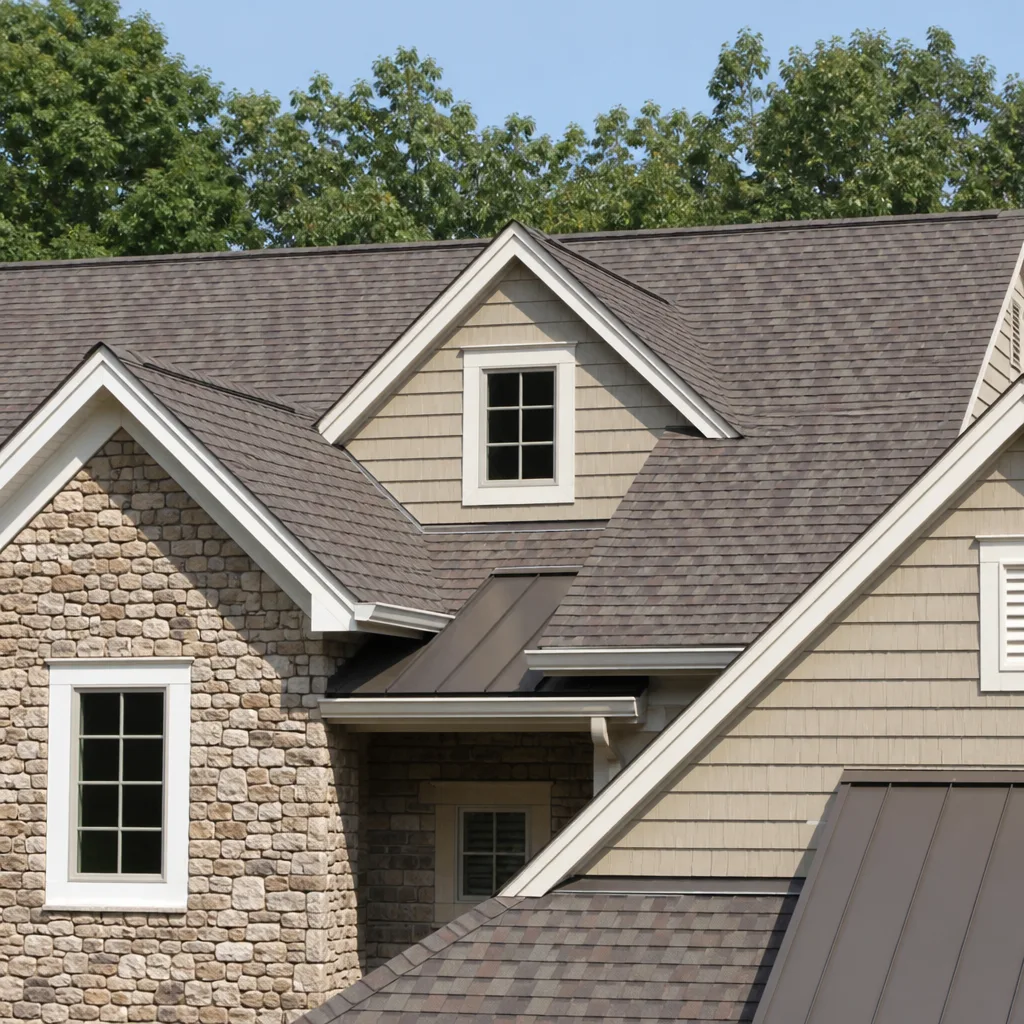 Owens Corning
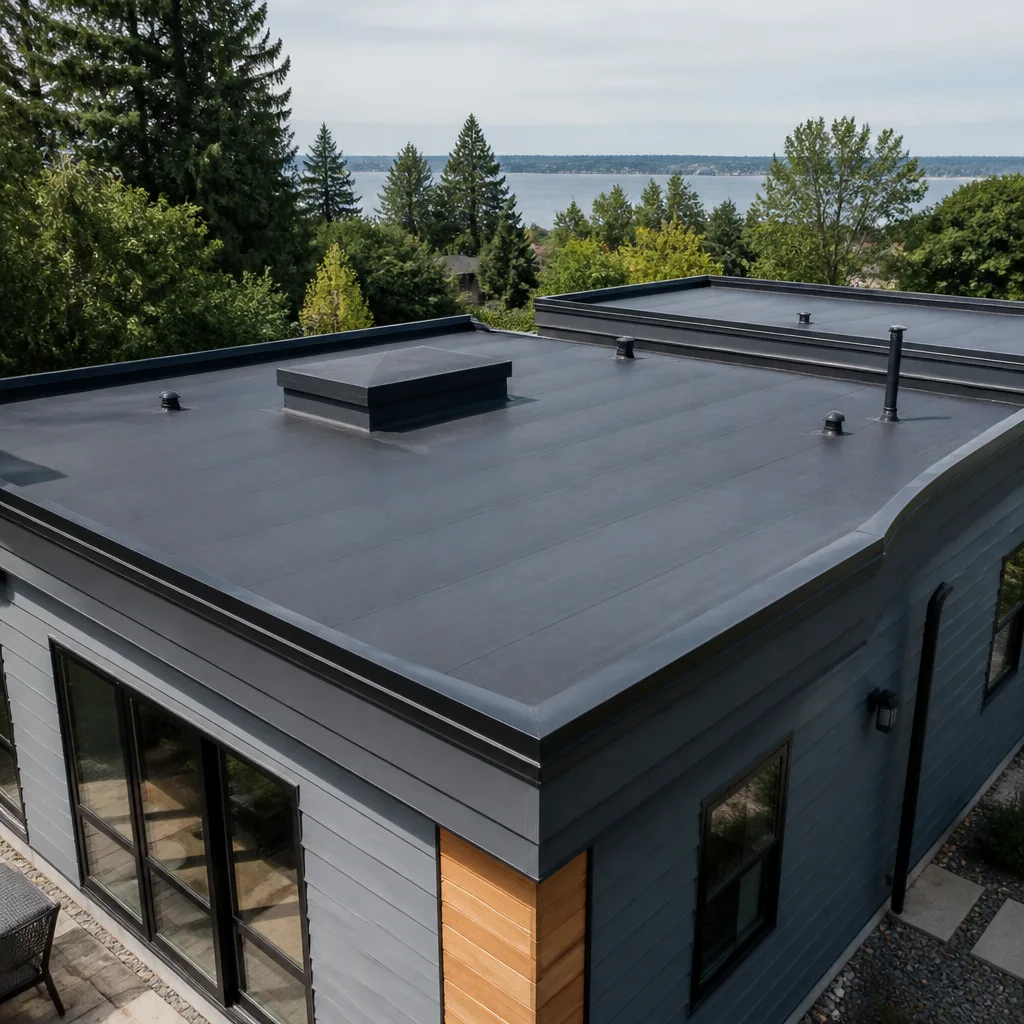 Flat & low-slope
Free roof inspection with deck photos before we talk money - GAF and Owens Corning certified installation
Roofing Cost Breakdown: The Boulder City Homeowner’s Reference for 2026
Here’s the part of roofing pricing that surprises people most: the cheapest bid you get in Boulder City is often the one that hasn’t priced anything in yet. A contractor from the Las Vegas valley can hand you a clean number, then discover the Boulder City permit fee schedule, the city’s inspection timeline, and the load of materials delivered out from the valley weren’t in it. Those costs don’t disappear. They surface later, usually as a change order or a lesser spec quietly swapped in. This guide pulls the cost apart so you can see what you’re actually paying for and what a low number is quietly leaving out.
Quick Answer
A full roof replacement in Boulder City runs roughly $9,000 to $28,000 for most homes depending on material, and repairs typically fall between $350 and $2,200. Three-tab and architectural shingles sit toward the bottom of that range, concrete tile and standing seam metal toward the top. What moves the number most in Boulder City is tear-off layers, decking condition, permit and disposal logistics, and the material you choose.
Styles & brands we work with
- Architectural shingles
- Metal roofing
- Tile roofing
- GAF
- Owens Corning
- Flat & low-slope
Table of Contents
- What does roofing cost per square in Boulder City in 2026?
- How do material choices change the price?
- Why does tear-off cost more in Boulder City?
- What do Boulder City permits and inspections add?
- How do you read a roofing estimate line by line?
- What’s the real cost per year of each material?
- Should you repair or replace?
- How do you get accurate bids here?
What does roofing cost per square in Boulder City in 2026?
Roofers price by the “square,” which is 100 square feet of finished roof, not 100 square feet of floor plan. That distinction matters in Boulder City, where pitched roofs add surface area through hips, valleys, and ridge lines, so the square count often runs higher than a homeowner expects from their floor plan.
Typical 2026 estimates for installed roofing in Boulder City:
- 3-tab asphalt shingle: $450 to $650 per square
- Architectural shingle: $600 to $900 per square
- Concrete tile: $1,100 to $1,800 per square
- Standing seam metal: $1,300 to $2,100 per square
- TPO (low-slope sections): $700 to $1,100 per square
These bands reflect a smaller contractor market than the Las Vegas valley, where more competition compresses pricing. In Boulder City fewer crews work regularly, and the ones who do carry the permit knowledge and delivery logistics into their numbers. That isn’t markup for its own sake; it’s the cost of doing a roof correctly in a city that isn’t a metro.
One thing to watch: per-square pricing on a one-brand bid can look lower simply because the material tier is lower. We install across seven of the industry’s leading roofing brands, including GAF, CertainTeed, Owens Corning, and Boral, so we can match the material to your roof and your budget instead of forcing the one brand a competitor happens to push. That choice, not the headline per-square rate, is what determines whether the number holds up over time.
How do material choices change the price?
Material is the biggest single lever on your cost, and in Boulder City’s high-desert climate the choice also drives how long the roof lasts under intense UV load. Here’s how the options compare on cost and expected service life.
- 3-tab asphalt shingle: Entry tier, lowest upfront cost, roughly 20-year lifespan. Fine for budget-focused jobs on simpler roofs.
- Architectural shingle: Mid tier, thicker profile, roughly 25-year lifespan. The most common choice for good reason: better wind and impact resistance than 3-tab at a modest premium.
- Concrete tile: Premium tier, roughly 50-year lifespan, extremely UV-stable. Heavy, so decking and framing must be checked before committing. Boral is one of the tile lines we work with.
- Standing seam metal: Premium tier, long lifespan, reflects heat well, and handles the desert swing from hot days to cold nights without the flex that wears on other materials.
- TPO: For low-slope sections and flat transitions, not a full pitched-roof material but often part of a Boulder City roof where sections meet.
We install and source materials from GAF, Owens Corning, CertainTeed, IKO, Atlas, Tamko, and Boral, which means genuine choice across budget tiers rather than a take-it-or-leave-it single brand. Manufacturer-backed product warranties are available through the top-tier lines like GAF and Owens Corning, though the exact terms always depend on the product and the installation. When you’re comparing bids, ask each contractor which brand and product line the number is built on, because “architectural shingle” can mean very different things at different price points.
Why does tear-off cost more in Boulder City?
Tear-off is where bids in Boulder City vary most, and it’s rarely because the labor itself differs. It’s because the number of existing layers, the condition of the decking underneath, and the logistics of getting old material out and new material in all behave differently in a smaller market.
What drives tear-off cost here:
- Number of layers. A single layer of old shingle comes off faster than two or three. Older Boulder City homes sometimes carry multiple layers, and each one adds removal time and weight.
- Decking condition. Once the old roof is off, soft or damaged decking has to be replaced before the new roof goes on. You can’t see this until tear-off starts, which is why a reputable bid builds in an allowance rather than pretending it won’t happen.
- Disposal logistics. Old roofing is heavy, and hauling it out of a non-metro location to a proper disposal site carries real cost. A valley contractor may underestimate this and pass it on later.
- Access. Sloped sites, tight lots, and long carries to the truck all add labor hours.
This is the single most common place where a low bid quietly falls apart. The contractor who priced tear-off against a metro average, not Boulder City conditions, discovers the gap on day one. Ask every bidder how they’ve accounted for layers, decking, and disposal, and you’ll quickly see who has actually worked in Boulder City.
What do Boulder City permits and inspections add?
Roof replacement in Boulder City needs a permit through the city’s building department, and the permit and inspection process is a line item worth understanding rather than glossing over. Permit fees are typically a few hundred dollars and vary with the scope and valuation of the job, but the bigger cost is often the inspection timeline, which shapes how the job is sequenced.
How permits typically factor in:
- Permit fee: Paid to the city, usually a few hundred dollars depending on job scope. It appears as a line on a proper estimate, not folded into “miscellaneous.”
- Scheduling: Inspections follow the city’s timeline, so a crew that knows the process builds the schedule around it. One that doesn’t may leave your roof open longer than necessary.
- Compliance: The work has to meet code and pass inspection. Skipping or shortcutting the permit is a false economy that can surface at a home sale.
The gap between a contractor who has worked Boulder City permits and one who has only worked Clark County is real. Valley crews are used to a different schedule and a different building department. The contractors who actually know Boulder City’s permit process price it in from the start, and their bid holds up because of it. When you compare estimates, ask directly: is the permit included, and who pulls it?
How do you read a roofing estimate line by line?
An estimate is only as useful as its specificity. A one-line “replace roof: $14,000” tells you nothing about what’s being installed or what happens when the decking turns out soft. Here’s how to read one properly.
- Material spec. The bid should name the brand and product line, not just “shingle.” “Architectural shingle” is a category; “GAF Timberline” or “Owens Corning Duration” is a specification.
- Underlayment. This is the layer beneath the shingles, and its spec matters in a UV-heavy climate. A vague underlayment line is where corners get cut. Ask what’s being used and why.
- Flashing. Flashing is the metal and sealing where the roof meets walls, chimneys, vents, and valleys. It’s the most common leak point, and it should be a named line item, not assumed.
- Tear-off and disposal. How many layers are being removed, and is the dump cost included?
- Decking allowance. A real bid sets an allowance for replacing damaged decking rather than pretending none will be found.
- Permit. Who pulls it and is the fee included?
- “Miscellaneous.” This line is where a vague bid hides its gaps. Ask for it itemized before you sign.
We put every estimate in writing as a line-item quote, with fixed pricing and no change orders beyond what’s agreed in writing. That’s the standard any Boulder City homeowner should hold every bidder to. The full baseline for our service is on our Roofing Boulder City page, and there’s a deeper walkthrough of what each line means on our roof replacement page.
What’s the real cost per year of each material?
Upfront price only tells half the story. The better question in Boulder City’s climate is cost per year of service, because a high-desert roof takes UV and temperature swings that wear some materials much faster than others. Here’s how the math shapes up.
- 3-tab shingle: Say $9,000 installed for a simple roof at a 20-year lifespan is roughly $450 per year. The least expensive upfront, but you re-roof twice as often as a tile roof.
- Architectural shingle: Say $14,000 at a 25-year lifespan is around $560 per year. Slightly more per year than 3-tab, but better performance between replacements.
- Concrete tile: Say $26,000 at a 50-year lifespan is roughly $520 per year. The premium cost spread over double the lifespan often comes out competitive or better, and tile holds its color under UV.
- Standing seam metal: Comparable long-term math with strong heat performance and low maintenance over its life.
The lesson isn’t that tile always wins. It’s that comparing bids on upfront cost alone ignores how many replacements you’d buy over the same period. Under Boulder City’s sun load, the long-lived materials can make financial sense, but only when the decking and framing can carry them. We inspect first, then recommend. No assumptions, no upsell.
Should you repair or replace?
The right answer depends on where the roof sits in its life, not on which option earns the contractor more. Repair when a problem is localized and the roof has years left. Replace when the system is at end of life or the problems are spreading.
Repair is usually the right call when:
- Damage is confined to one area, such as around a flashing point, a vent, or a valley.
- The roof is well within its expected lifespan and the rest of it is sound.
- You’re preparing for a home sale and need a specific issue resolved.
Replacement is usually the right call when:
- The roof is near or past the end of its expected lifespan for its material.
- Leaks are showing in multiple areas, or repeated repairs keep returning to the same problem.
- Decking or underlayment has failed beneath the surface.
For immediate problems, our roof repair service handles it. The honest diagnostic is what tells you which way to go, and that’s why we offer a standalone roof inspection as a real diagnostic, not a sales call dressed up as one. If you’re a buyer or seller, or you just want to know the condition of your system, that inspection stands on its own even if no work follows.
How do you get accurate bids here?
The way to get a number that holds up in Boulder City is to compare bids that are built the same way. Three contractors quoting three different scopes can’t be compared by price alone.
- Get the inspection first. Know the roof’s actual condition before anyone quotes. That way you’re comparing on the same facts.
- Require line-item quotes. Material, underlayment, flashing, tear-off, decking allowance, and permit, each on its own line.
- Ask about permits and Boulder City’s inspection timeline. The answer tells you who has worked here.
- Ask about disposal logistics. How is old material being hauled out, and is it in the price?
- Get the warranty in writing. Manufacturer-backed product warranties through top-tier brands are available; the terms depend on product and install.
- Compare cost per year, not just upfront.
Free estimates are the start, not the sales call. For the broader picture of how we approach work across the city, see our Boulder City page. Roofing is all we do, and that focus shows in every job.
Common Mistakes to Avoid
- Choosing the lowest bid without a scope to compare. The lowest number is often the one with the most left out. Ask what’s included before you compare prices.
- Ignoring the permit line. A bid that skips the Boulder City permit hides a cost and a compliance risk. Ask who pulls it.
- Letting “miscellaneous” swallow the details. That line hides vague specs and surprise charges. Get it itemized.
- Not asking the underlayment spec. Underlayment failure is invisible until it leaks, and in this UV load it’s a real cost factor.
- Forgetting disposal. Hauling old roofing out of a non-metro location costs real money. Confirm it’s in the price.
- Comparing upfront cost only. A 20-year roof and a 50-year roof look very different per year of service under Boulder City’s sun.
- Skipping the inspection. Without a real diagnostic, you’re guessing whether repair or replacement is right.
See the difference
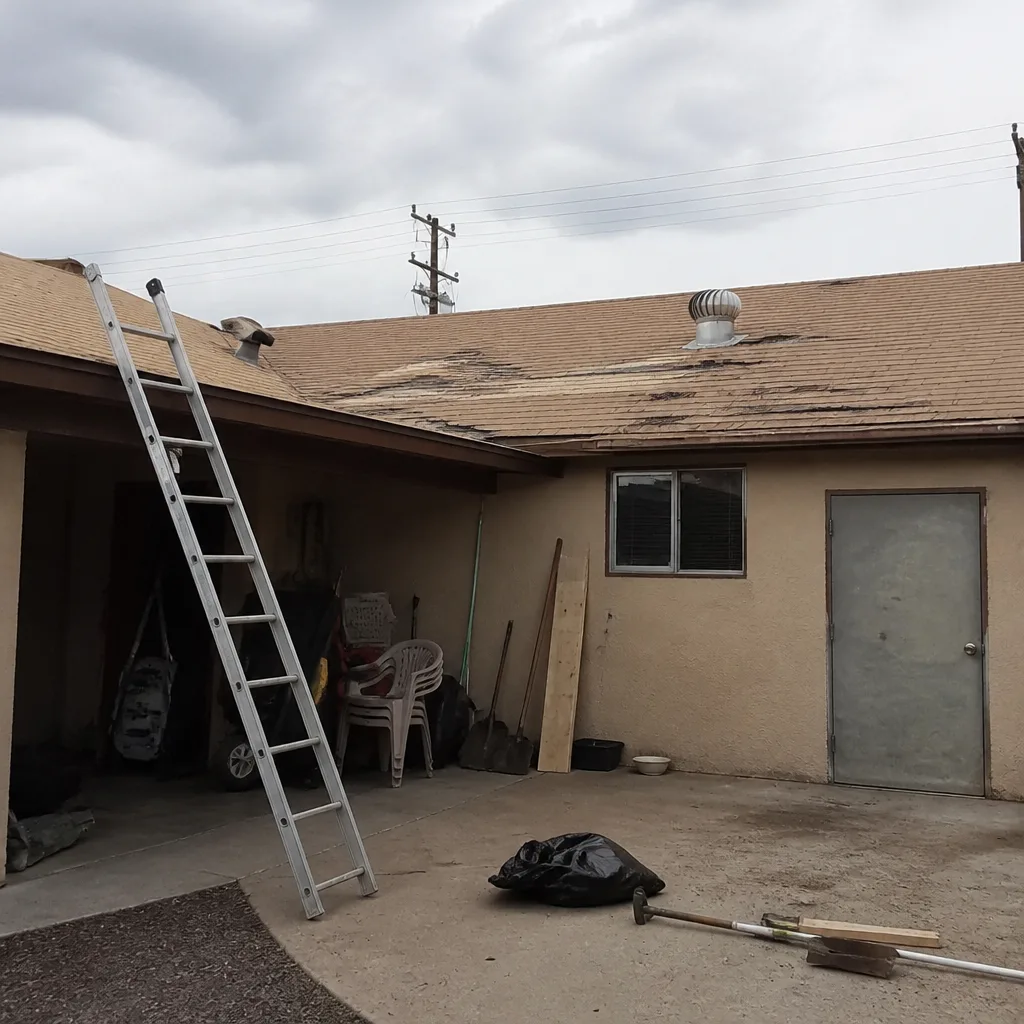 Before
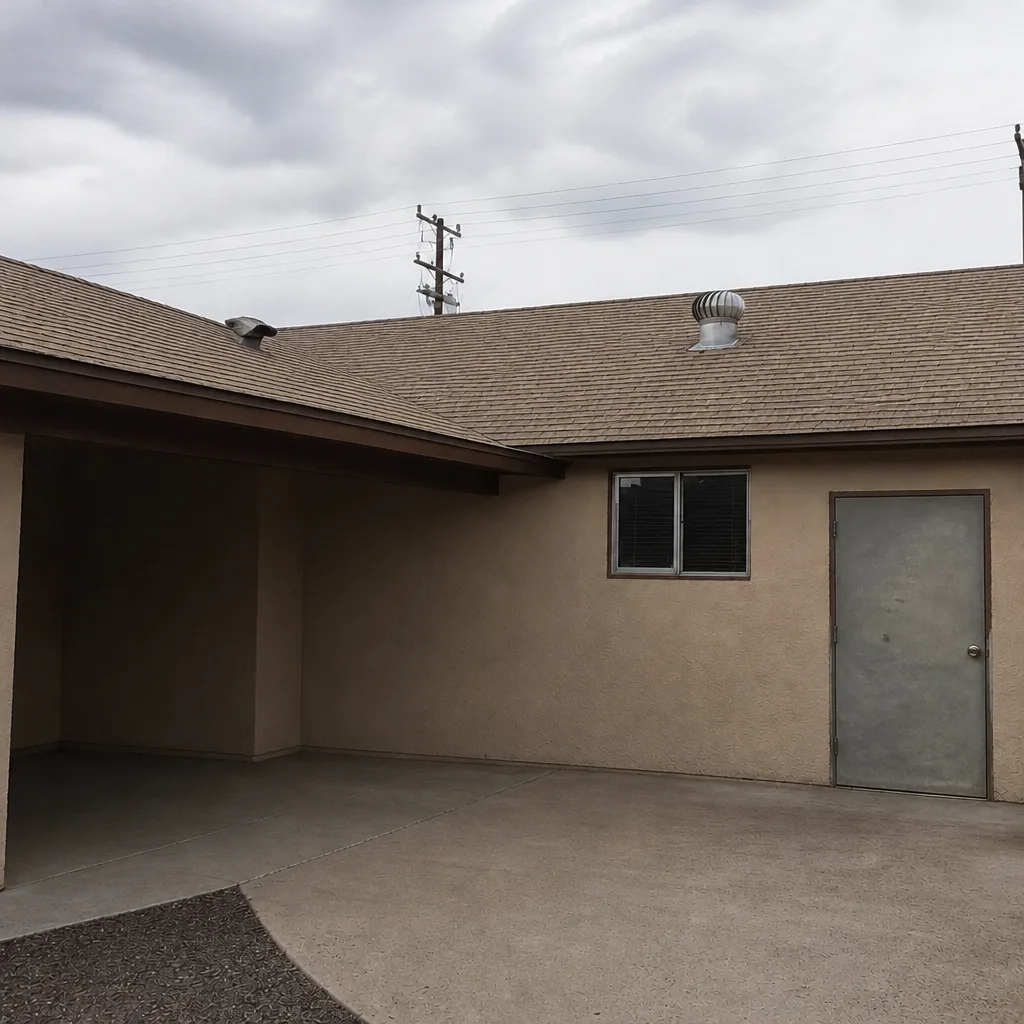 After
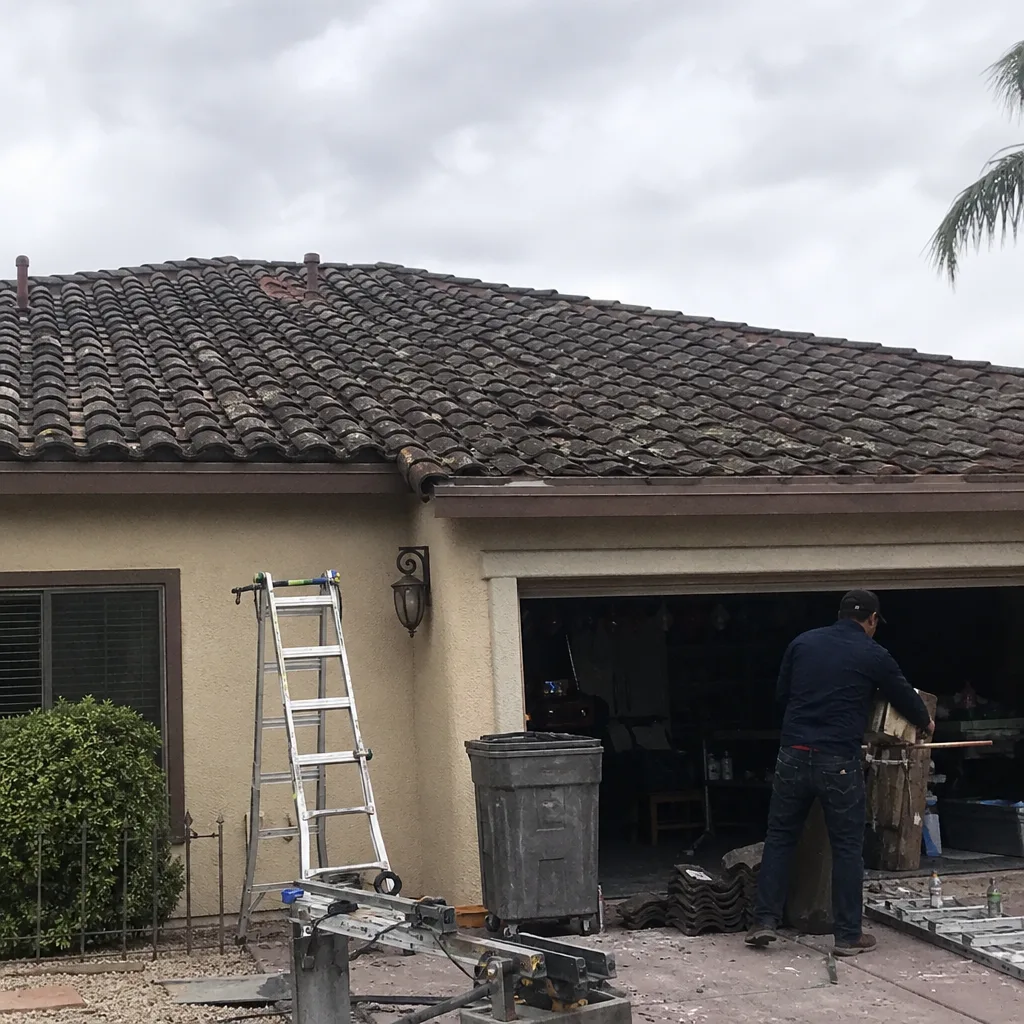 Before
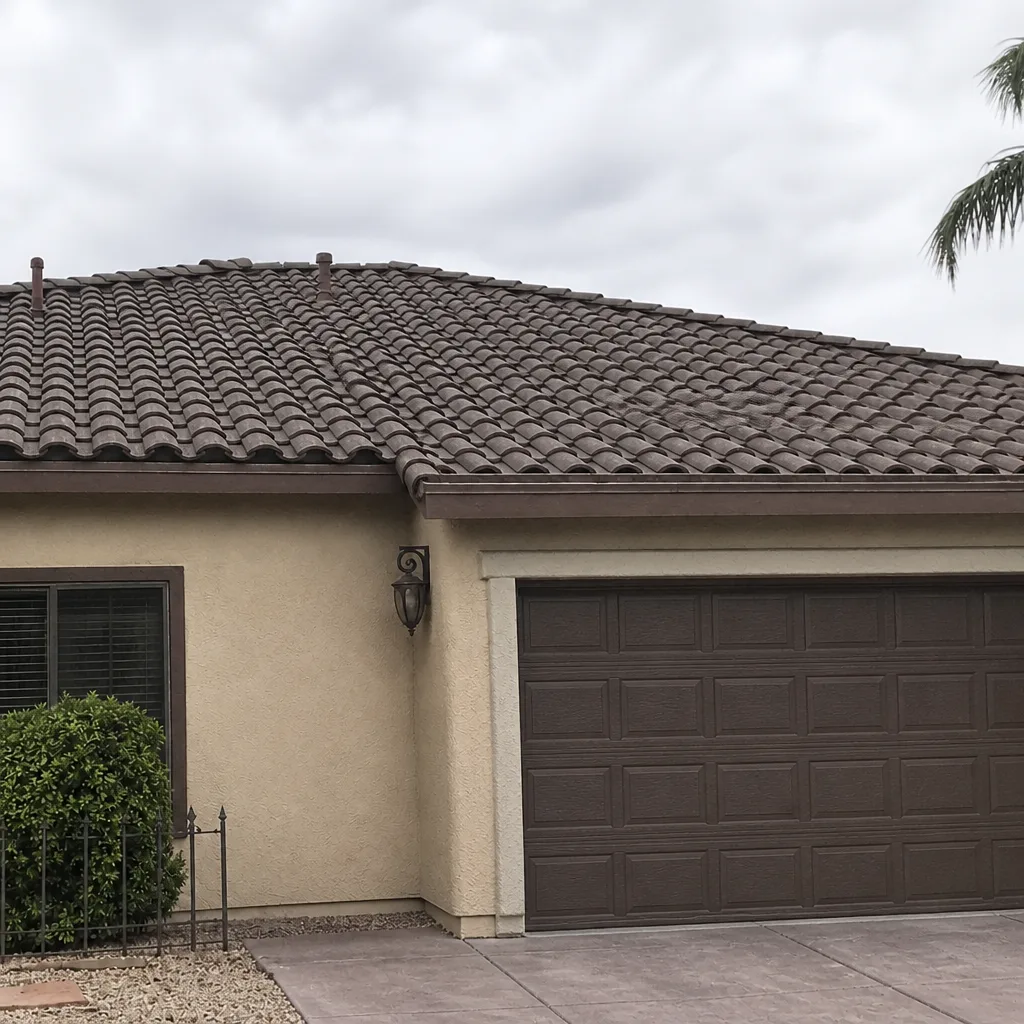 After
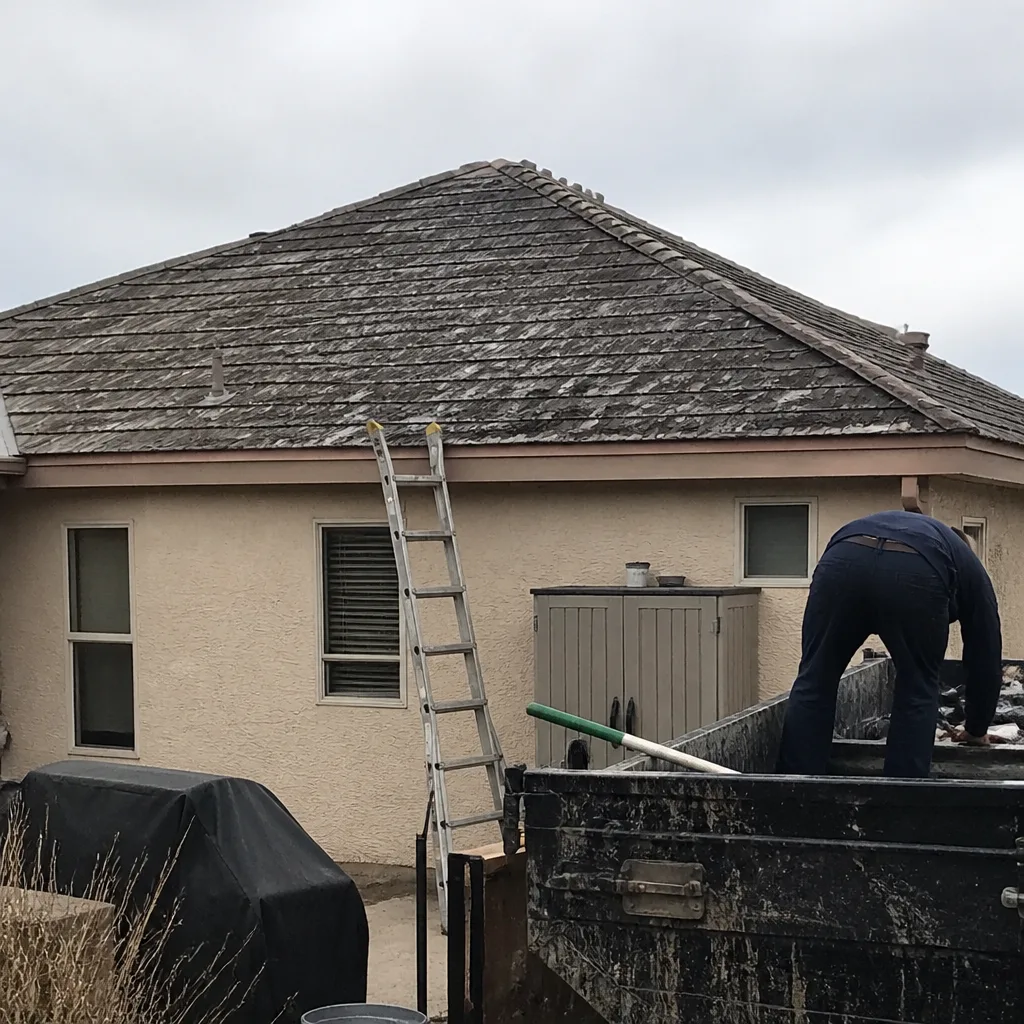 Before
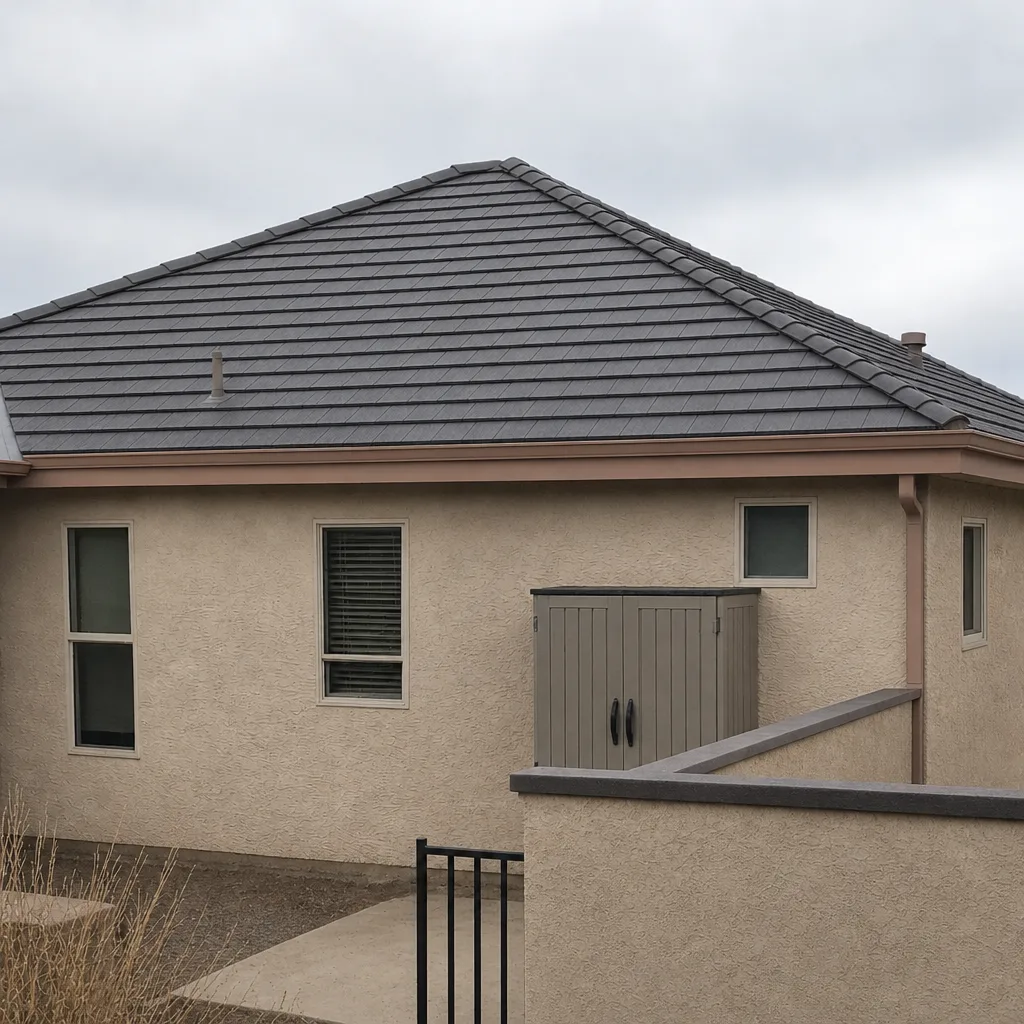 After
When to Call a Professional
Call when you see leaks or water stains on ceilings, missing or lifted shingles after a storm, granular loss on shingles, or exposed or damaged flashing at wall and valley points. Call before a home sale so you have a real diagnosis, and call if a prior repair keeps returning to the same spot. Roof work at height carries genuine risk, and anything involving the roof structure, decking replacement, or flashing detail is best left to trained professionals. If you’re unsure whether you need repair or replacement, an inspection answers that before any work begins. Roofing Boulder City offers free estimates in Boulder City, and we’re glad to look first and tell you what’s actually going on. Call (888) 293-7813. We answer 24/7. Fast dispatch from 7am to 7pm, Sunday through Friday.
Frequently Asked Questions
Most Boulder City roof replacements run roughly $9,000 to $28,000, with the exact figure depending on material, roof size, tear-off layers, and decking condition. Call (888) 293-7813 for an exact quote; estimates are free.
A properly written bid shouldn’t change beyond what’s agreed in writing, but hidden decking damage can only be confirmed once tear-off begins. That’s why we build a decking allowance into the estimate rather than surprise you later. We use written line-item quotes with fixed pricing and no change orders beyond what’s agreed. Call (888) 293-7813 to talk through your roof.
Roof replacement in Boulder City needs a city permit, and the permit should be a named line on your estimate rather than folded into a vague charge. We handle the permit and the inspection process as part of the job. Call (888) 293-7813 for a free estimate that shows it clearly.
Timeline depends on roof size, material, and the city inspection schedule, and it isn’t a same-day project. Shingle roofs go faster than tile or metal, and the Boulder City inspection timeline shapes the sequence. Call (888) 293-7813 and we’ll walk you through a realistic schedule for your roof.
Concrete tile often makes strong financial sense because it lasts roughly twice as long as architectural shingle, and spreading the cost over that lifespan frequently comes out competitive per year of service under Boulder City’s UV load. The trade-off is weight and the need to check decking first. Call (888) 293-7813 for a free estimate comparing your options.
No, we’re closed on Saturday. We dispatch Sunday through Friday, 7am to 7pm. Call (888) 293-7813 if you want to book a free estimate, and we’ll get you into the next opening.
The Bottom Line
Roofing cost in Boulder City rests on four things: material choice, tear-off reality, permits and inspection, and disposal logistics. Material drives the biggest swing, and under this climate the choice shapes cost per year more than upfront price alone. Per-square ranges give you a starting point, but the estimate that holds up is the one with every line itemized and the permit named. Repair when repair is right; replace when it’s not. If a bid looks too low, ask what it left out. For a straight answer on your roof, call (888) 293-7813. Estimates are free.
Written by the team at Roofing Boulder City.