
Last updated November 17, 2026
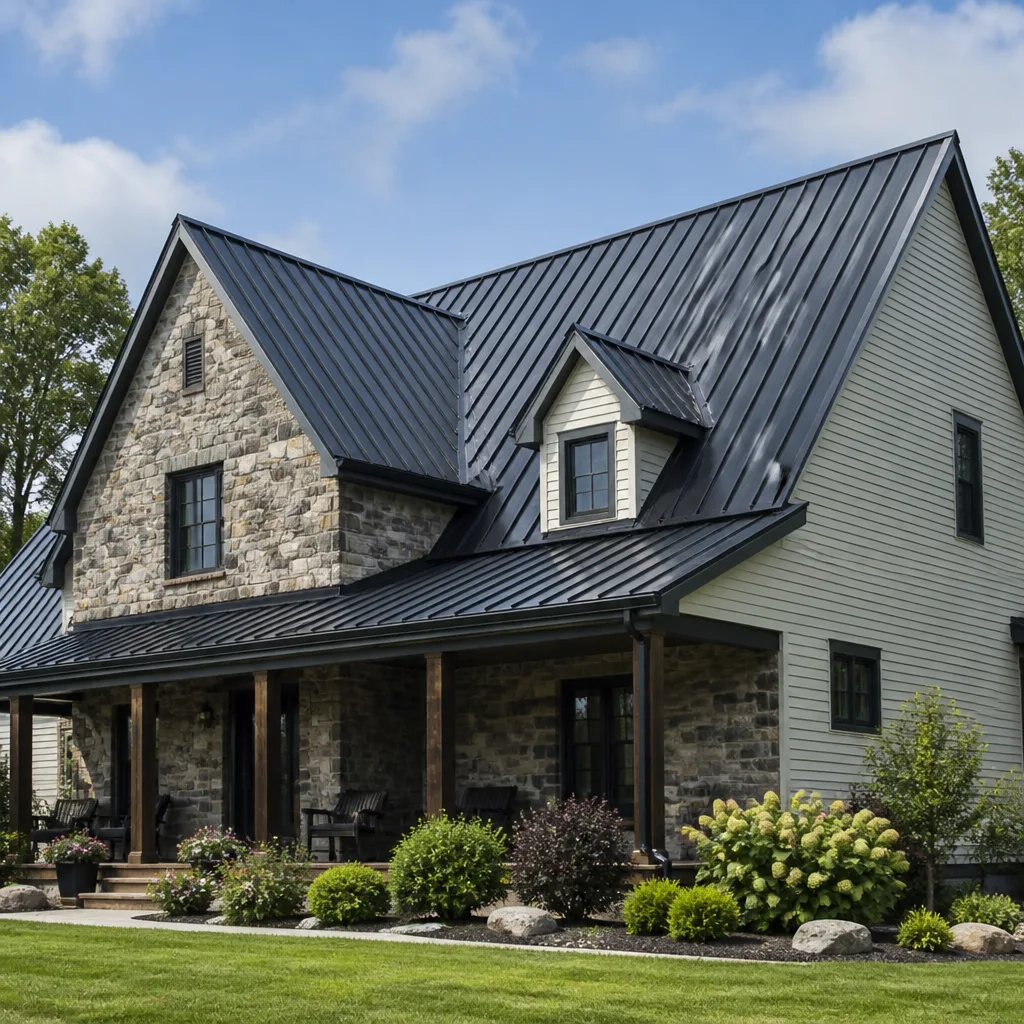 Metal roofing
 Architectural shingles
 Tile roofing
 GAF
 Owens Corning
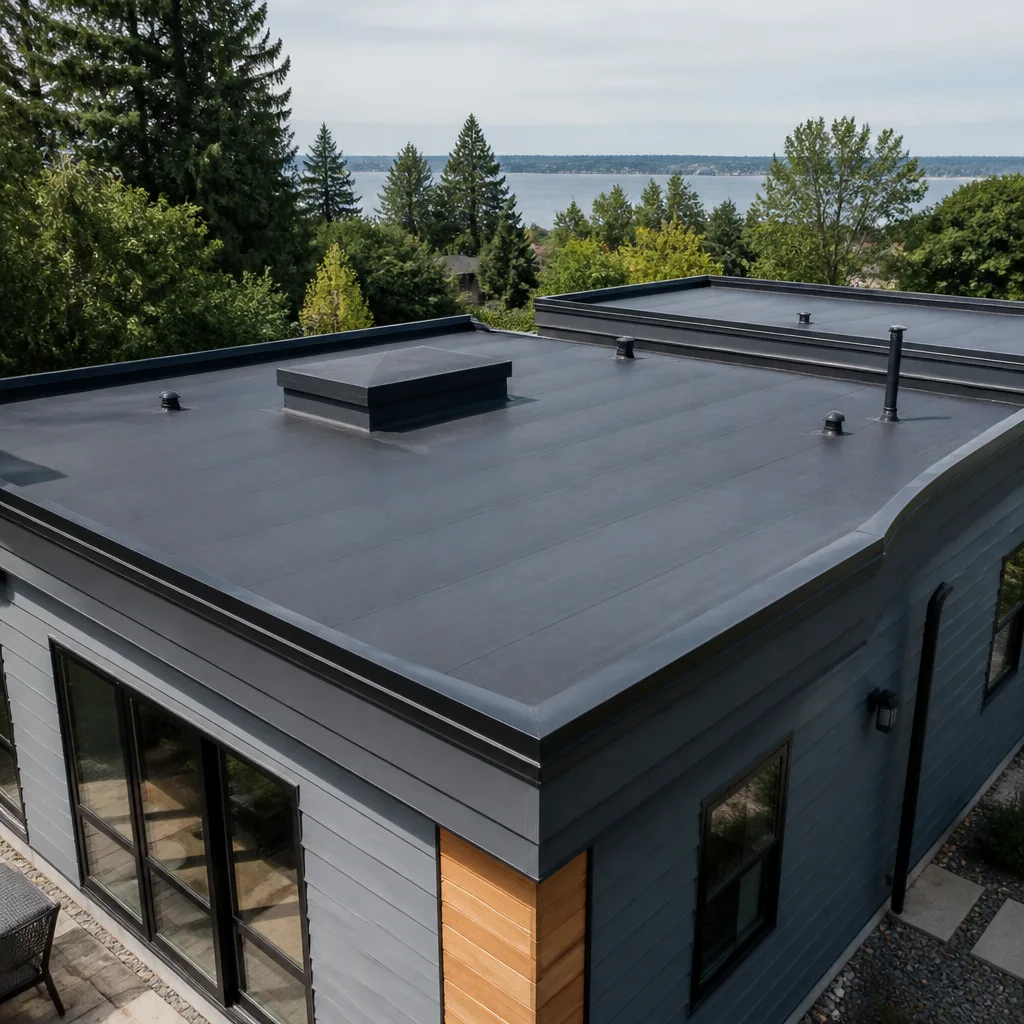 Flat & low-slope
Free roof inspection with deck photos before we talk money - GAF and Owens Corning certified installation
Roofing Emergency Preparedness Guide for Boulder City Homes
Boulder City averages fewer than 5 inches of rainfall a year, so it’s easy to treat roof weather as someone else’s problem. But almost all of that rain lands in violent 1-to-3 inch monsoon bursts. Twenty minutes of that kind of water can do more roof damage than a decade of desert sun. Add the fact that HVAC technicians climb onto Boulder City roofs regularly to service swamp coolers and rooftop condensers, and you have the two events that drive most roofing emergencies here: monsoon storms and equipment punctures. This guide walks you through both, from what to do in the first two hours after a storm to how to vet a contractor under pressure. Keep it somewhere you can find it before you need it.
Quick Answer
Roofing emergencies in Boulder City usually come from monsoon storm damage or punctures left behind by HVAC service, and the homeowners who spend the least are the ones who document the damage and stabilize the roof safely before calling anyone. Tarp or patch active leaks, photograph everything from multiple angles before anything gets moved, and have a trusted roofer inspect within days. Most importantly: distinguish emergency-level damage from damage that can wait. That single judgment call saves Boulder City homeowners the most money.
Styles & brands we work with
- Architectural shingles
- Metal roofing
- Tile roofing
- GAF
- Owens Corning
- Flat & low-slope
Table of Contents
- What to Do in the First Two Hours After Storm Damage
- Emergency-Level Damage vs. Damage That Can Wait
- Insurance Documentation: What Adjusters Actually Need
- Vetting an Emergency Roofer Under Pressure
- What to Keep on Hand for Roof Emergencies
- The HVAC Puncture Problem on Boulder City Roofs
- Understanding the Boulder City Monsoon Pattern
- When to Call a Professional
What to Do in the First Two Hours After Storm Damage
The first two hours after a monsoon cell passes over Boulder City determine how much damage a roof sustains. Water is actively moving through the structure during that window, and what you do (or don’t do) decides whether a repair stays a repair or becomes a replacement.
Work through these steps in order:
- Get eyes on the roof from the ground first. Use binoculars from your yard. Look for shifted shingles, missing ridge caps, lifted flashing, and anything hanging or sagging. Never climb onto a wet roof. The most common emergency-room injury after a monsoon isn’t from the storm; it’s from a homeowner who slipped on wet tile.
- Check the attic from inside. Look for daylight coming through the decking and water staining on rafters or insulation. A flashlight and a slow walk beats a broken ankle any day.
- Contain interior water. Buckets, towels, and moving furniture away from drips. If water is pooling near an electrical panel or ceiling fixture, kill the power to that room before anything else.
- Photograph everything before touching it. This is covered in detail below, but do it early. Storm debris and fan noise from a wet-dry vacuum will disappear, and your photos won’t.
- Tarp or patch only if you can do it safely from a ladder at the edge of the roof or from the ground with a long reach. If the leak is mid-slope, on a steep pitch, or near a power line, stop and call a professional. Your roof repair conversation will be cheaper than a hospital visit.
- Call Roofing Boulder City at (888) 293-7813 to book an inspection. We answer 24/7. Fast dispatch from 7am to 7pm, Sunday through Friday.
The safe temporary tarping technique for Boulder City’s common roof pitches matters. Most local homes are low-slope or shallow-pitch over flat decks, or moderately steep composition shingle. On a shallow pitch, a tarp laid over the ridge and weighted at the edges works fine. On anything steep enough to feel uncomfortable, don’t. Tarping is a stopgap, not a repair. It needs to keep the water out until a technician gets there, nothing more.
Emergency-Level Damage vs. Damage That Can Wait
The most expensive mistake Boulder City homeowners make after a storm is calling every roofer in town at 10pm. The second is doing nothing. The difference between an emergency and a scheduled repair comes down to specific, visible thresholds.
Treat it as an emergency if you see any of the following
- Active water entering the living space. If water is dripping through a ceiling, through a light fixture, or down a wall, the roof has failed at that point.
- Visible sagging in the ceiling, a bulging drywall seam, or the sound of a ceiling feeling “soft” underfoot in the attic. Structural water weight is a real hazard.
- Missing or torn-off flashing at a chimney, skylight, or vent stack that’s exposed to open sky. That’s an open hole.
- A missing shingle field larger than a few feet or an entire section of ridge cap that’s shifted.
- Any puncture. An HVAC technician who stepped on a weak panel or a roofer who left hardware on the deck can create a small hole that becomes a much bigger one after the next rain.
- Water pooling against the fascia or running behind the siding.
These typically wait for a scheduled inspection
- Lifted ridge caps with no gap to the interior.
- Granule loss in the gutters or at the bottom of a downspout. This is age, not emergency.
- Cosmetic cosmetic strain or minor shingle curling on a field with no leak beneath it.
- A single nail pop or a few lifted shingle tabs.
- Moss growth or algae streaking.
- Discoloration of the ceiling from an old, resolved leak.
The threshold isn’t aesthetic. It’s whether water is actively moving through the assembly or can move in at the next rain. If you can’t tell, treat it as urgent and book a diagnostic roof inspection. A named, stand-alone inspection is not a sales call. It tells you which side of the line you’re on, in writing.
Insurance Documentation: What Adjusters Actually Need
Documentation is where most insurance claims either sail through or stall. Boulder City homeowners who photograph properly before moving a single loose shingle spend considerably less on the claim process than those who take a few phone shots after the roof has been tarped.
Here’s the protocol we recommend for every storm event:
- Photograph from four angles. Get one shot from each compass direction on your property line, plus one close-up of the damage itself. Adjusters care about perspective because it confirms the damage is where you say it is on the structure.
- Capture the roof surface, not just the corner. Wide shots of an entire elevation, then a mid-range shot, then a close-up sequence of every damaged area. Three distances, same subject.
- Timestamp everything. Most phone cameras embed a timestamp automatically, but turn on the timestamp overlay if you have it, and do not edit, crop, or filter the photos after the fact. Adjusters can and do check metadata.
- Photograph interior damage separately. Ceiling stains, water on floors, sagging drywall, and wet insulation in the attic all belong in a separate folder with their own close-ups.
- Keep the failed material intact until the adjuster has seen it. Loose or torn shingles, flashing, and underlayment are the proof of cause. Bundle it and store it where it can’t blow away.
- Write down the date and time of the storm and the date and time you noticed the leak. Two dates, in a notes app, are worth a lot when a claim gets reviewed months later.
Do this before you call a contractor, not after. Once work begins, the material evidence of cause is altered or removed. If a claim becomes complicated, that gap in the record becomes the problem. When the adjuster arrives, the contractor should be able to walk the roof with them and talk through the cause in their language. If your contractor pushes you to skip the adjuster and just start work, that’s a warning sign.
Vetting an Emergency Roofer Under Pressure
The phone call you make twenty minutes after a monsoon cell passes through Boulder City is the highest-risk moment in the whole process. Storm-chasing contractors are trained to be the first truck in the neighborhood after a big event. They know you’re scared, the roof is wet, and the sun is going down. They’re counting on you to make a decision in that window.
Two questions separate legitimate roofing companies from people with a ladder and a business card.
Question 1: “Are you licensed and insured, and what’s the license number I can verify?”
A legitimate contractor will give you their license number without hesitation, and it will check out with the state. A storm chaser will get vague, tell you they’re “working with” a licensed company, or ask why you need it. If the answer isn’t a clear yes with a number you can verify, hang up. It’s not a sales tactic. It’s the difference between a contractor whose insurance covers a fall from your roof and one whose homeowner insurance will.
Question 2: “Do you require a written contract with a scope of work before you start?”
Legitimate contractors don’t start work without a written, line-item scope describing what the repair covers and what it doesn’t. If someone offers to “get started right now and we’ll sort out the paperwork later”, they’re managing their risk, not yours. A roof repair is a contract, not a handshake. Get the scope, get the price in writing, and read it before anyone climbs a ladder.
A third piece of free advice: a good roofing contractor has a home base in the region, has other work scheduled, and isn’t here just for the season. Roofing Boulder City is a roofing specialist, not a generalist contractor who chases storms and also does siding. Repair, replacement, and inspection. That’s the menu.
What to Keep on Hand for Roof Emergencies
Every Boulder City homeowner should have a small, inexpensive emergency roof kit. The materials cost less than a takeout dinner and prevent thousands in interior damage while you wait for the technician. Store it in the garage, not the attic, and label the box so you can find it in the dark.
Short list of what to keep:
- Self-adhering membrane patch (roll or pre-cut squares). This is the single most useful item. It goes over a small puncture or a lifted shingle and immediately stops water intrusion without tools.
- Roofing screws or coated pancake-head screws with rubber washers (a handful). Essential for re-securing a loose flashing collar or a vent base after a monsoon.
- Flashing tape. Use it to bridge a small gap at a vent boot or around a nail hole, if you can reach it safely from the edge of the roof.
- A 6-mil tarp, 10×12 or larger, plus a bundle of heavy bungee cords. Can be deployed from the ground over a shallow pit or draped over a section of decking.
- Work gloves, a headlamp, and a five-gallon bucket. The bucket is for catching drips and for holding loose debris so it doesn’t blow into a downspout.
- A waterproof folder for documentation. Put your photos, notes, and any contractor estimates in one place so an adjuster or a contractor sees everything together.
What you should not have in the kit: any temptation to get on the roof alone. A patch applied from the ground or a ladder at the edge is a temporary fix. Actual repairs on a steep pitch near a vent or a chimney need a trained technician with fall protection, and that’s the piece that has to be professionally done.
The HVAC Puncture Problem on Boulder City Roofs
Our climate runs two air conditioning systems hard: the standard condenser and the evaporative cooler many Boulder City homes have kept running for comfort in the dry heat. Both types of equipment sit on the roof, and both get serviced by HVAC technicians who climb up there regularly. That service traffic is the source of the second-biggest category of roofing emergencies we see.
The mechanics are simple. A technician servicing a rooftop unit steps where the decking is thin, kneels on a softened panel, or drags a tool across shingles. A small puncture, a torn boot, or a lifted shingle is the result. For weeks or months afterward, it’s invisible. Then the first monsoon event drives water through the puncture and into the ceiling below, and the homeowner has no idea where the leak came from.
What to do about it:
- Ask your HVAC technician to photograph the unit area before and after every service. A roofer can compare the two and pinpoint any new damage.
- Book a standalone roof inspection once a year, ahead of the monsoon season. Roofing is the only thing we do, and a focused inspection is a diagnostic, not a sales call. We inspect first, then recommend. No assumptions, no upsell.
- Don’t let an HVAC tech patch a roof on their way off. The repair needs to be done by someone who does roofing full-time. A dab of sealant over a puncture will fail after one summer.
- If you see a footprint or a crushed boot on the roof, take a photo. That’s the evidence you’ll need to point at the right cause later.
None of this is about blaming the HVAC contractor. It’s the reality of service traffic on a roof. Pre-monsoon inspection is the cheapest insurance you can buy, and it’s the piece most homeowners skip.
Understanding the Boulder City Monsoon Pattern
Boulder City sits at the edge of the Mojave, and the local weather pattern has a specific shape that’s worth understanding if you want to prepare. Most of the annual precipitation arrives in short, intense bursts between roughly July and September, when monsoon moisture moves north from the Gulf of California. The rain is violent and brief. The rest of the year, it’s dry.
What that pattern does to roofs, in plain terms:
- Sun exposure dominates the wear curve. All year, UV breaks down shingle granules, dries out sealant, and expands and contracts flashing. That’s the slow rot.
- The monsoon is the test. Every small failure that the dry season opened up gets a wet, compressed exam in a few hours. If the flashing sealant failed three months ago, you probably won’t know until a monsoon cell proves it.
- Wind drives damage along one exposure. Local monsoon cells often arrive with a directional gust. Whatever edge of the roof faces that gust gets the first damage. That’s where missing ridge caps and lifted shingles show up.
- Flat or shallow-pitch decks are vulnerable to ponding. Any area where water pools and sits for more than a day after the storm is a drainage problem, not a shingle problem, and it’s the one to fix first.
The takeaway for Boulder City homeowners is this: the dry season is the season for inspection, and the wet season is the season for response. Most people have the calendar backward. The two weeks before the first monsoon cell is the single best window in the year to book a diagnostic inspection and catch a small failure before it becomes an emergency.
Common Mistakes to Avoid
- Climbing onto the roof during or right after a storm. Wet shingles, wet tile, and dust make a slick surface. The single most common storm injury in this area isn’t a roofing injury at all; it’s a homeowner on a wet roof without fall protection.
- Starting the repair before the adjuster sees it. Once the damaged material is gone, the cause is gone. If you have any intention of filing a claim, the photos and the material evidence need to be in place first.
- Calling every roofer in town the night of the storm. You can’t vet a contractor in a panic. Slow down, ask the two questions above, and pick the one whose answers make sense.
- Booking a pre-monsoon inspection the week after the monsoon. By then it’s a repair, not an inspection. Boulder City’s dry season is the window; use it.
- Letting an HVAC technician patch the roof. A sealant dab closes the hole for one season. A proper repair closes it for the life of the roof.
- Skipping a written contract to “get it started.” A handshake and a price on the back of a card is not a scope of work. Insist on line-item written estimates before work begins.
- Ignoring a slow leak because it only occurs a few times a year. In Boulder City, that means a few monsoon events. Every one of those events pushes water further into the decking. A leak that’s cheap to fix after the first storm gets expensive after the third.
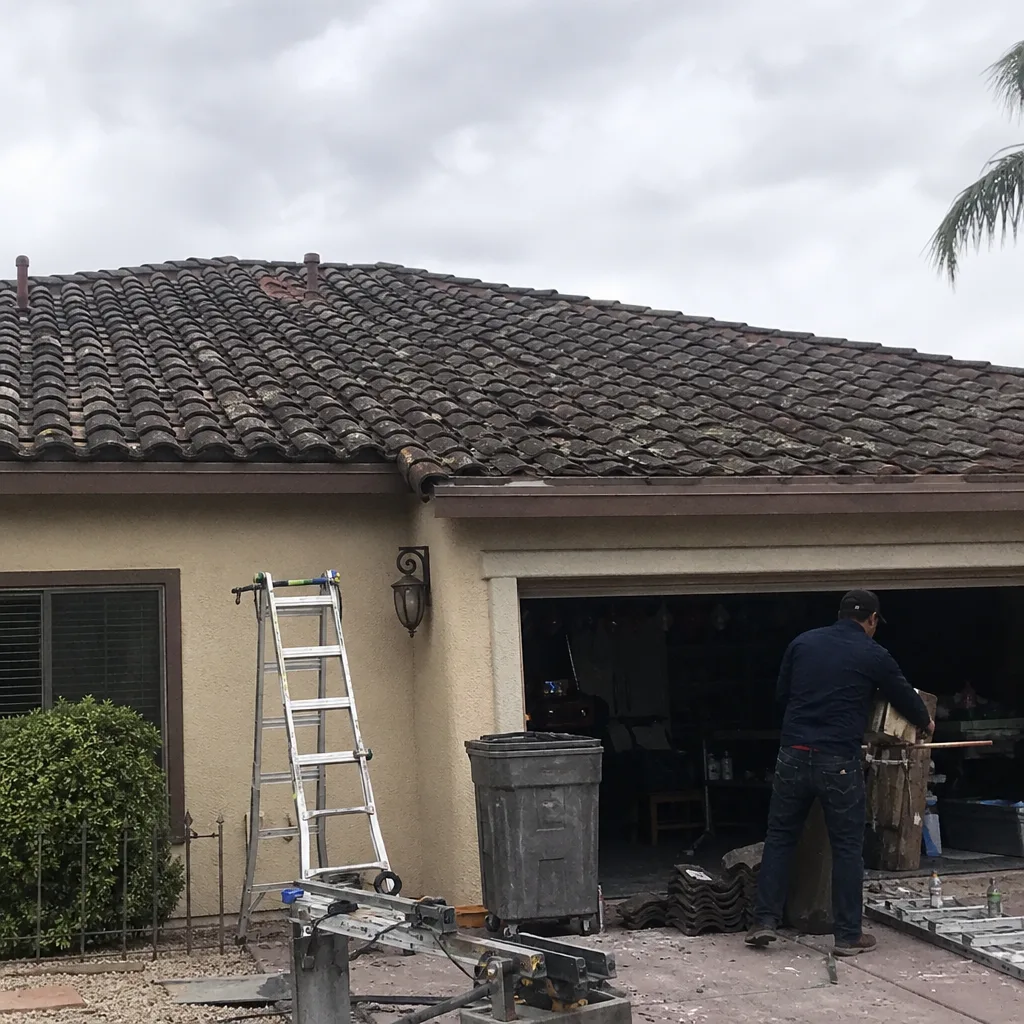
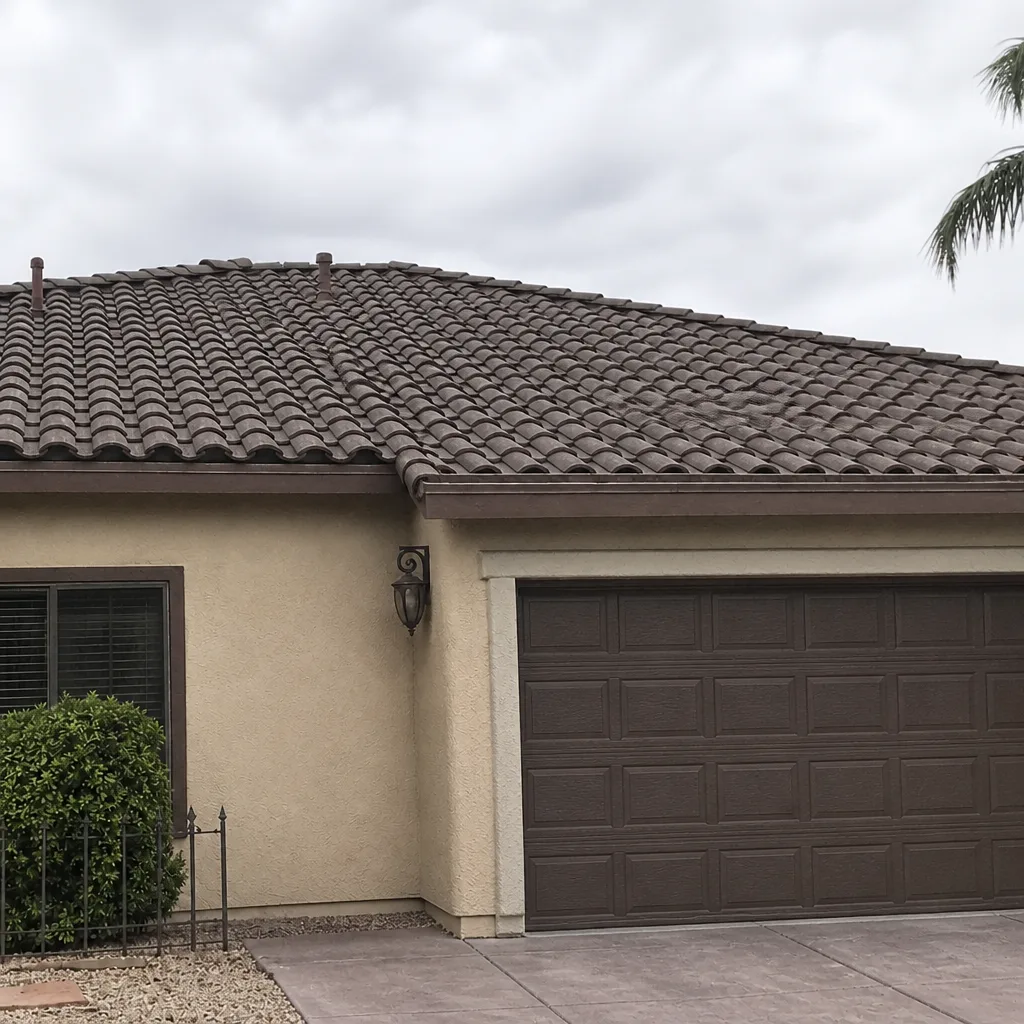
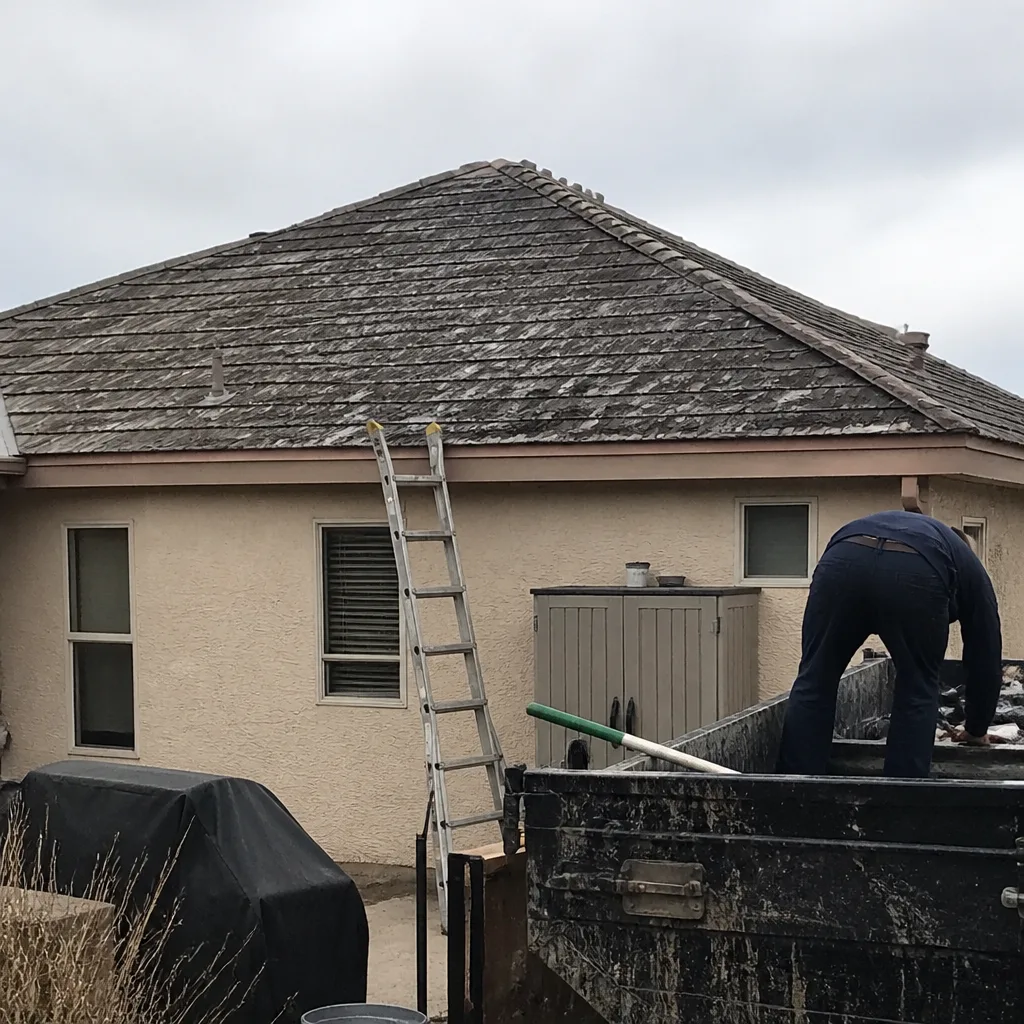
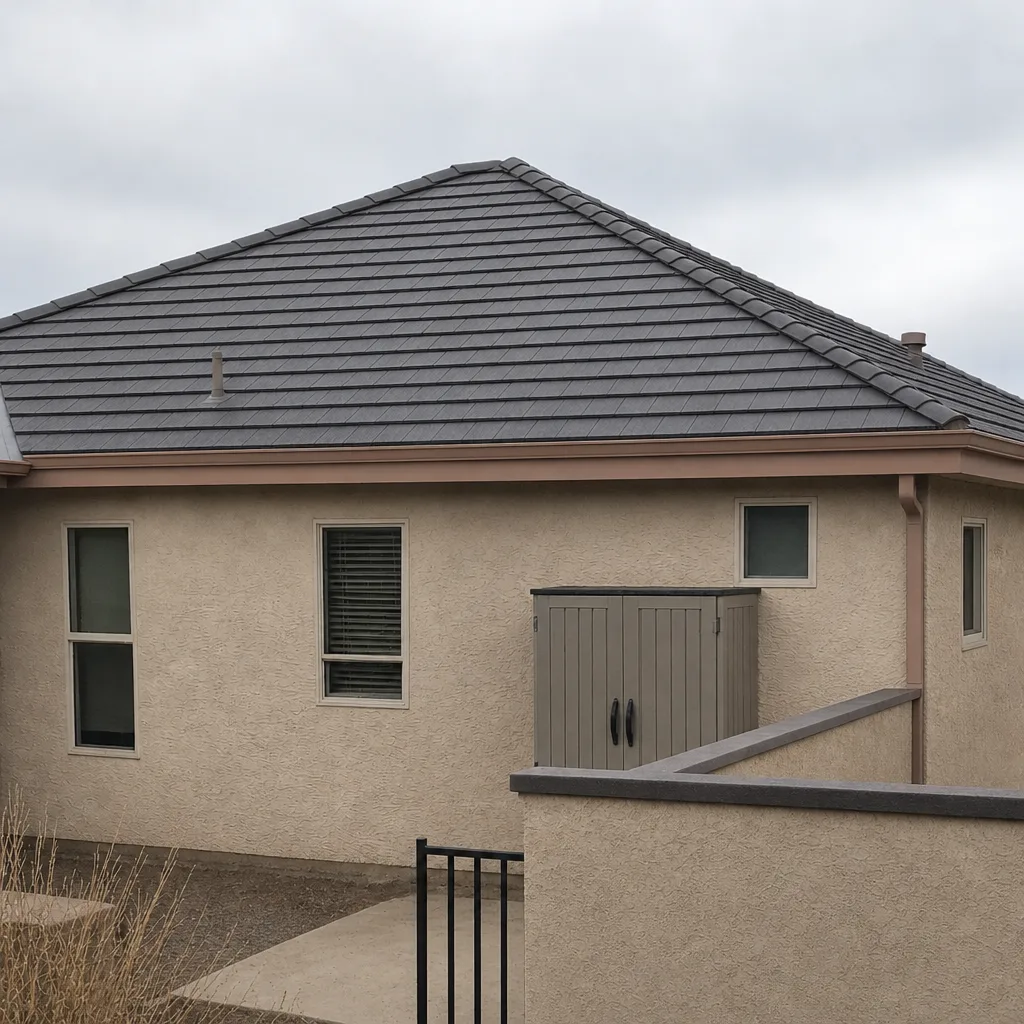
See the difference
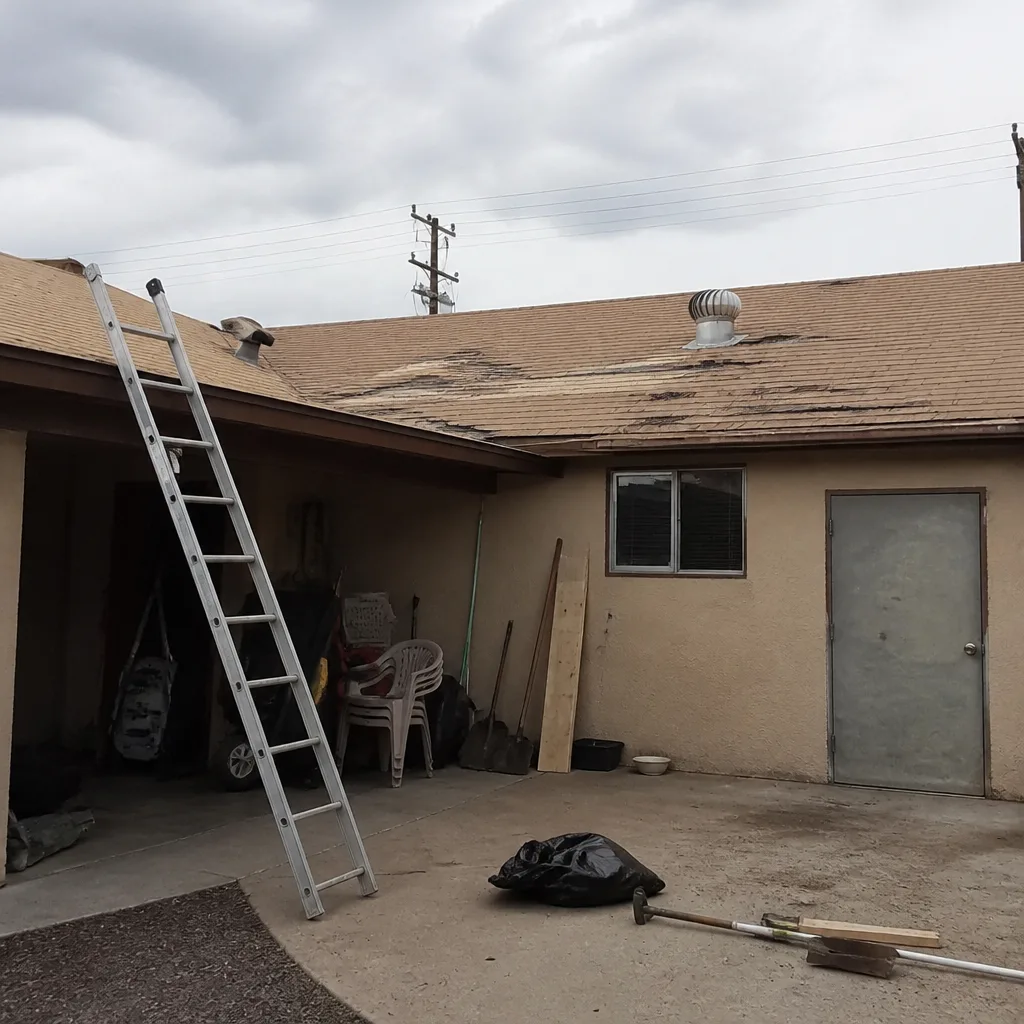 Before
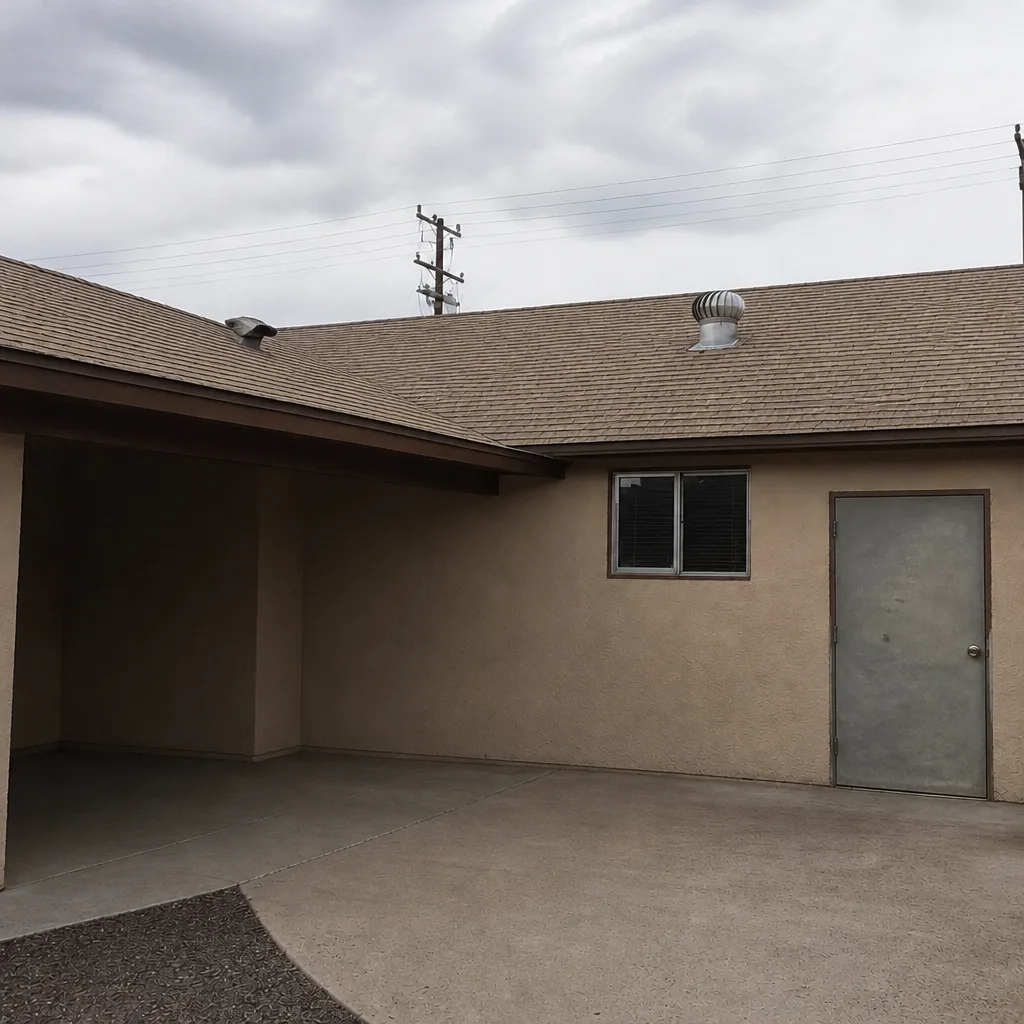 After
 Before
 After
 Before
 After
When to Call a Professional
Call us if water is entering the living space, if the ceiling is bulging or sagging, if you can see missing flashing or a section of shingle field torn away, or if you have a puncture anywhere on the roof surface. Also call if a storm just passed through and you’re on the fence about whether the damage is “bad enough”. The cost of a diagnostic inspection is far lower than the cost of missing a real failure. If you’re selling a home or buying one, an inspection is a named service on its own; we don’t tie it to a sales call. If you’ve been told by an HVAC technician that “the roof looks fine”, or by your neighbor that “that’s probably just age”, it’s still worth confirming with someone who does roofing as the only item on the menu. Very minor damage can wait for a scheduled inspection, but a diagnostic visit tells you which side of the line you’re on with certainty.
Roofing Boulder City offers free estimates in Boulder City. Call (888) 293-7813 to book one.
Frequently Asked Questions
Most storm-related repairs fall into a range determined by the size of the affected area, the roof pitch, and the material. Small repairs (a few shingles, one flashing boot, a single puncture) sit at the low end, and larger repairs (a partial field replacement, multiple vent boots, or a damaged section of decking) sit higher. The written estimate is the final price, and it’s free. Call (888) 293-7813 for an exact quote.
No. A written, line-item estimate describes what the repair covers and what it doesn’t, and that’s the price. If a technician discovers hidden damage during the repair, we stop and let you know before doing anything further. You won’t find out about extra costs after the fact. Call (888) 293-7813 to schedule a free estimate.
Yes. Most roof replacements and larger structural repairs require a permit through the city, and a legitimate roofer pulls it as part of the job. Small repairs often don’t require one. If your project requires a permit, we walk you through what the city needs. Call (888) 293-7813 if you’re unsure what your repair requires.
A properly deployed tarp is a temporary stopgap that keeps water out until a technician can get to the roof. It isn’t a repair, and it doesn’t replace the damaged assembly. It buys you time and prevents interior water damage. If the tarp can’t be safely deployed from a ladder at the edge, call us instead at (888) 293-7813.
Most emergency repairs (a tarp, a patch, a flashing reseal) are completed in a few hours once we’re on the roof. A repair that requires replacing decking or a larger section of material may run into a second visit. The written estimate gives you the expected duration before the work begins. Call (888) 293-7813 to schedule an inspection.
There isn’t a single best answer, which is why we install across several major manufacturers: GAF, CertainTeed, Owens Corning, IKO, Atlas, Tamko, and Boral. For homes that want premium performance and manufacturer-backed warranties, GAF and CertainTeed lines are worth considering. For a budget-conscious replacement, Tamko and IKO offer solid entry-tier options that stand up well to desert sun. The right choice depends on your roof’s pitch, your budget, and how long you plan to stay in the home. That’s a conversation, not a one-brand sales pitch. Call (888) 293-7813 to talk through options.
The Bottom Line
Boulder City roofing emergencies come in two shapes, and both are predictable: monsoon storm damage and HVAC punctures. The homeowners who come out ahead haven’t done anything heroic. They’ve documented damage before touching it, they’ve learned to tell an emergency from a wait-and-see, they’ve kept a small emergency kit on hand, and they’ve vetted their roofer with two specific questions before anyone climbs the ladder. That’s the whole preparedness playbook. It costs almost nothing to put in place today, and it saves real money when the first monsoon cell hits. Roofing is all we do, and that focus shows when the call comes in.
Call (888) 293-7813 to schedule a free estimate. We answer 24/7. Fast dispatch from 7am to 7pm, Sunday through Friday.
Written by the team at Roofing Boulder City.